
SANDISK 256GB High Endurance microSD Card + Adapter
4.7Editor score
Continuous recording endurance
Full HD and 4K support
Adapter included for convenience
Explore the best Sandisk Microsd Card options for dash cams, drones, smartphones, action cameras, and 4K recording, compared by ratings, speed, capacity, and
A microSD card becomes the permanent home for photos, video, apps, recordings, and files that no longer fit comfortably on a device. The right Sandisk card depends on capacity, sustained video performance, read and write speed, device compatibility, and whether your priority is everyday expansion or demanding 4K and 5K capture.
This guide compares ten SanDisk microSD cards across the Ultra, Extreme, Extreme PRO, and High Endurance families. We evaluated the supplied ratings, advertised speeds, video classes, app-performance ratings, capacity, durability claims, intended devices, included accessories, and content-management support to identify the strongest options for different needs.
Each review reveals which use case the card best serves, while the comparison table provides a quick reference and the buying guide explains the technical details that matter. Retail pricing and product availability can change, so confirm the current specifications, device requirements, and listing details before making a purchase.
4.7Editor score
4.8Editor score
4.8Editor score
The comparison below places all ten cards side by side, highlighting capacity, stated speed, video class, and the devices or recording situations each model is designed to support.


The SANDISK 128GB Ultra microSD UHS-I Card is a practical general-purpose choice for expanding a compatible smartphone, tablet, camera, or laptop. Its 4.6 rating reflects a well-regarded balance of useful speed, broad everyday storage, and support for Full HD video. The A1 designation also makes it more appropriate for running applications from the card than a basic Class 10 model.
We may earn a commission when you buy through this link, at no additional cost to you.
Its headline advantage is an advertised read speed of up to 195MB/s when used with the specified SANDISK QuickFlow microSD UHS-I Card USB-A Reader. That speed is most useful when moving large collections of photos, videos, or music from a card to a computer. The card also carries V10, U1, and C10 markings, while its A1 class supports faster app launch and general app performance on compatible devices.
The main limitation is capacity. A 128GB card can become crowded quickly with high-resolution video, downloaded media, or several apps, especially when a device also stores large camera files internally. It is also not positioned as a high-endurance or advanced video card, so a dash cam or 4K production workflow may place greater demand on sustained recording than this model is designed to address.
This Ultra card is best for people who want a versatile card for mixed storage, Full HD clips, music, photos, and lighter app use. It makes more sense for daily organization than intensive professional capture. Buyers who create large 4K files or continuously record footage should consider a larger Ultra, an Extreme model, or a High Endurance card instead.
Its combination of 128GB, A1 performance, and Full HD support suits phones, tablets, compact cameras, and laptops that need additional room for everyday files. The Memory Zone application can also help users view, organize, back up, and transfer compatible content.
The stated 195MB/s read speed is a maximum figure tied to the recommended reader and suitable host equipment. Real transfers may be slower, so matching the card with compatible USB hardware is important when moving large batches of media.
We may earn a commission when you buy through this link, at no additional cost to you.
The SANDISK 256GB Extreme microSD Card + Adapter is a high-performance option for creators who routinely record demanding footage or move large files. Its 4.7 rating and advertised maximum speeds of 245MB/s read and 170MB/s write place it squarely in the performance-focused Extreme family rather than the everyday Ultra range.
We may earn a commission when you buy through this link, at no additional cost to you.
U3 and V30 ratings support 4K, 5K, and high-resolution workflows when the recording device is compatible. At 256GB, it offers enough room for a substantial media collection without moving to the largest capacity cards. The included adapter makes it easier to use the card with devices that accept full-size SD slots, while the QuickFlow-compatible transfer workflow helps reduce waiting during offloading.
The card's specifications are most impressive when the host device and reader can sustain them. Phones, cameras, laptops, and card readers vary considerably in interface speed, so users should not expect every device to deliver the advertised maximum. The extensive durability claims also describe the card itself and should not be confused with protection for the files if the card is removed while a device is writing.
Choose this Extreme model when speed and sustained video capability matter more than simple file expansion. It is well suited to action cameras, drones, compatible Android devices, and photographers who want rapid transfers and large recording sessions. Users with modest storage needs or older equipment may find a standard Ultra card more appropriate.
High read and write speeds help the card handle large media files and reduce transfer delays. The greatest benefit appears with compatible cameras, drones, phones, and readers that can exploit the UHS-I interface and advertised performance.
The supplied information lists resistance to temperature, humidity, water, shock, drops, magnets, X-rays, and wear. These protections make the card a sensible companion for mobile and outdoor equipment, though careful handling remains important.
We may earn a commission when you buy through this link, at no additional cost to you.
The SANDISK 128GB High Endurance Video microSDXC Card is engineered for devices that record continuously, especially dash cams and home monitoring systems. Its 4.7 rating reflects the value of a specialized card designed around endurance rather than maximum creative-camera performance. It is also compatible with the original Nintendo Switch, but not Nintendo Switch 2.
We may earn a commission when you buy through this link, at no additional cost to you.
The card supports Full HD and 4K UHD recording when the host device, file attributes, and usage conditions permit. Its endurance design is rated for recording up to 10,000 hours in the applicable Full HD scenario, although the actual retention time is lower and varies with video quality, resolution, and other factors. C10, U3, and V30 markings provide clearer guidance for compatible recording equipment.
Its 128GB capacity means older footage will need to be transferred or deleted sooner than footage stored on the 256GB version. That is a meaningful consideration in a dash cam that automatically overwrites the oldest files. This model also lacks the aggressive application-performance emphasis found in some Ultra and Extreme cards, making it less relevant to users who want to install apps directly on the card.
This High Endurance card is a strong choice for a compatible dash cam, home camera, or other continuous-recording system that needs more resilience than an ordinary card. It is less compelling for mobile app storage or large creative projects. For longer unattended recording, the 256GB version offers more retention without changing the core endurance focus.
A camera that writes for hours places different demands on a card than one used for occasional photos. The High Endurance family is designed to prioritize dependable sustained recording for monitoring and vehicle use.
The stated endurance figure applies to a particular Full HD scenario, and actual usable recording time is lower. Resolution, bitrate, file size, motion, and device behavior all influence how much footage the card can retain before older files are overwritten.
We may earn a commission when you buy through this link, at no additional cost to you.
The SANDISK 256GB High Endurance microSD Card + Adapter delivers the core endurance concept with twice the nominal storage of the 128GB version. Its 4.7 rating makes it one of the strongest specialist choices for dash cams and home monitoring systems, particularly when longer footage retention is more important than portable app performance.
We may earn a commission when you buy through this link, at no additional cost to you.
The supplied information gives it a high-endurance design rated for up to 20,000 hours in the applicable Full HD scenario. As with the 128GB card, actual recording time is lower and depends on resolution and other variables. C10, U3, and V30 classes, together with stated support for Full HD and 4K video, make it suitable for compatible devices that can take advantage of those formats.
The included adapter adds convenience for full-size SD-compatible equipment, while the original Nintendo Switch is supported. It would be less suitable for users seeking strong application performance or the fastest transfer speeds in the Extreme range. The card's main appeal comes from combining endurance with a larger recording window rather than from maximum read speed.
This is a compelling pick for vehicle owners and home-monitoring users who want generous capacity without moving into a creative camera card. It may also suit compatible Nintendo Switch users seeking additional storage. Choose it when continuous recording and retention are primary, and verify that the target camera supports the intended card capacity and video format.
Doubling the capacity can reduce how often a monitoring device reaches back and overwrites important clips. Users should still establish a regular transfer routine because no card can preserve an unlimited number of continuous recordings.
High Endurance cards are purpose-built for sustained writing, making them more relevant to dash cams and surveillance devices than general-purpose cards. They remain useful for ordinary storage, but specialized design should guide the purchase.
We may earn a commission when you buy through this link, at no additional cost to you.
The SanDisk 512GB Extreme microSD UHS-I Card combines a generous 512GB capacity with the high performance associated with the Extreme line. Its 4.7 rating and stated support for action cameras, drones, Android devices, 4K UHD, and 5.3K video make it a serious option for creators who want to record extensively without changing cards frequently.
We may earn a commission when you buy through this link, at no additional cost to you.
Advertised read and write speeds reach 245MB/s and 170MB/s on applicable capacities, while U3 and V30 classes support demanding video recording. The card is explicitly positioned for high-performance environments and offers broad durability protections, including resistance to water, shock, drops, temperature, humidity, magnets, X-rays, and wear.
Real-world results still depend on the camera, drone, phone, or reader used. A host with a slower interface may deliver much lower transfer performance, and high-resolution footage can fill 512GB faster than a basic media collection. The card does not include an adapter in the supplied title, which may matter for users who need one for full-size SD equipment.
Choose the 512GB Extreme when you need substantial capacity and strong video performance in the same card. It is particularly attractive for long action-camera sessions, drone flights, and compatible mobile workflows. If your priority is app storage or simple file expansion, a lower-capacity Ultra card may deliver a more straightforward experience.
A 512GB card can hold a substantial body of 4K or high-resolution footage, reducing card changes during long sessions. Actual duration depends on the resolution, bitrate, codec, and whether the device saves additional files or metadata.
The advertised speeds represent the card's maximum under suitable conditions. Camera controllers, drone interfaces, phone ports, and USB readers determine the rates actually achieved, so matching the card to capable equipment is essential.
We may earn a commission when you buy through this link, at no additional cost to you.
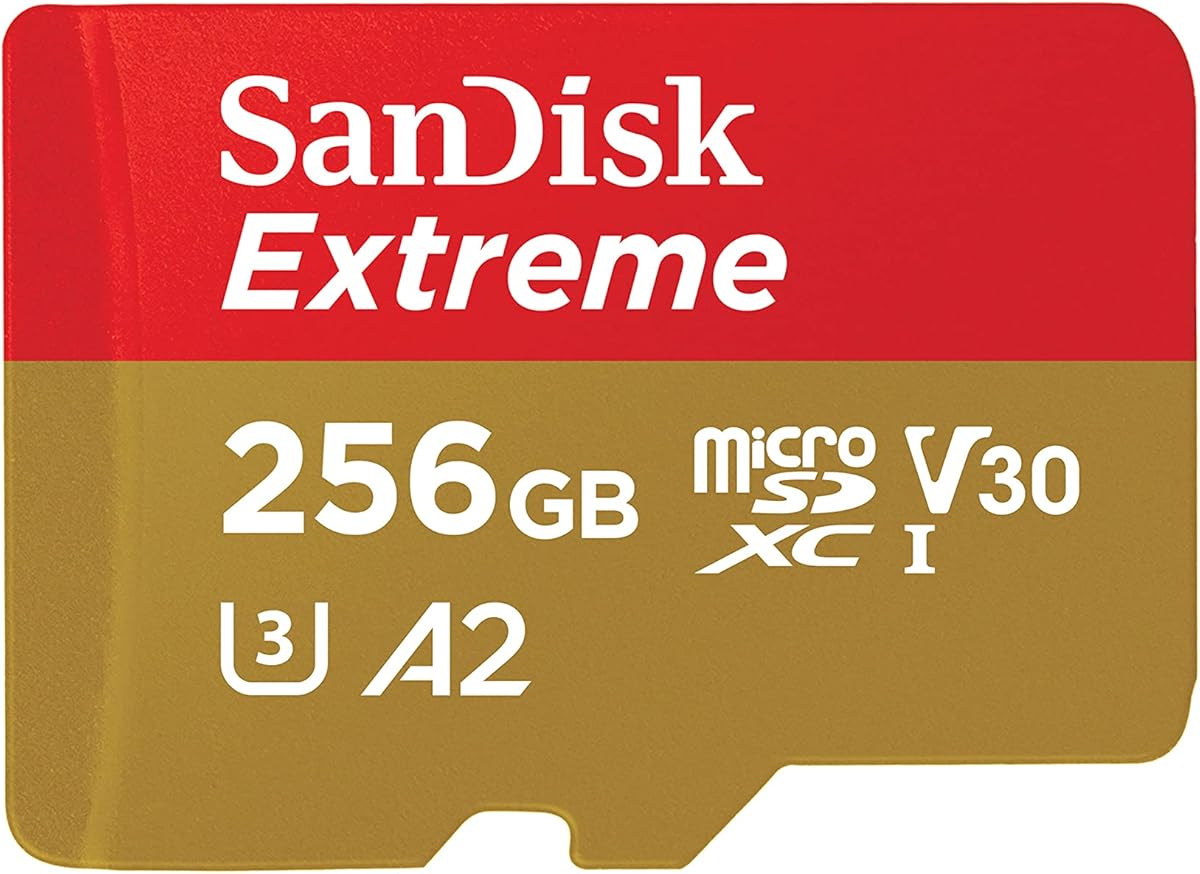
The SANDISK 256GB Extreme microSD Card + Adapter stands out as the most balanced performance pick in this group. Its 4.8 rating, 256GB capacity, A2 application class, and U3 and V30 video ratings give it broad usefulness across compatible smartphones, cameras, drones, and other UHS-I equipment.
We may earn a commission when you buy through this link, at no additional cost to you.
The card is advertised to reach 190MB/s read and 130MB/s write speeds using compatible host devices. It also supports 4K and 5K UHD-ready recording, subject to the host device, file attributes, and other conditions. A2 performance can improve application loading and in-app responsiveness, making the card more versatile than a model intended only for media storage.
Its main limitation is that Extreme is not the same category as High Endurance. For a dash cam that writes continuously for long periods, a High Endurance card may align more directly with the task. The same applies when maximum endurance rather than quick offloading, A2 performance, or creative video support is the dominant requirement.
This Extreme card is the most attractive all-rounder for someone who wants one capable microSD card for mobile storage, demanding recordings, and fast transfers. The included adapter adds versatility, while 256GB provides room for a broad collection of media and applications. It is our Editor's Choice because it combines useful features without specializing too narrowly.
A2 indicates a higher application-performance standard intended to improve random read and write responsiveness. The benefit varies by phone, application, and workload, but it makes this card more relevant for users who plan to run apps from the microSD card.
The card's stated speed can be reached with compatible readers and host interfaces. Pairing it with suitable hardware can make offloading large media collections noticeably more convenient than using a basic card reader.
We may earn a commission when you buy through this link, at no additional cost to you.
The SANDISK 256GB Ultra microSD UHS-I Card offers more breathing room than the 128GB Ultra while retaining the family's accessible, general-purpose design. Its 4.6 rating reflects a versatile card aimed at Full HD media, mobile expansion, and everyday app use rather than advanced high-endurance recording.
We may earn a commission when you buy through this link, at no additional cost to you.
Up to 195MB/s read speed is available with the specified SANDISK QuickFlow reader, helping users offload files efficiently. V10, U1, C10, and A1 ratings make the card appropriate for Full HD video and compatible application workloads. The SANDISK Memory Zone application can assist with viewing, organizing, backing up, and transferring supported files.
A 256GB capacity can still fill rapidly with high-resolution video, downloaded movies, music, photographs, and applications. The card does not offer the U3 and V30 classes emphasized by the Extreme line, and it lacks the specialized endurance characteristics of High Endurance models. That makes it less targeted for demanding 4K workflows or cameras that write continuously.
The 256GB Ultra is best for users who want generous storage for a compatible phone, tablet, laptop, or camera with ordinary Full HD recording needs. It also offers more flexibility than a small card without moving into premium performance territory. Choose it when capacity and convenience matter more than specialized recording endurance.
Moving from a smaller card to 256GB gives photos, music, videos, and applications more room while retaining a familiar Ultra feature set. It is a practical middle ground for general-purpose mobile storage.
The available desktop and Android management app provides a central place for supported content. It can simplify transfers and backups, although users should still maintain separate copies of irreplaceable files.
We may earn a commission when you buy through this link, at no additional cost to you.
The SANDISK 256GB Ultra microSD Card + Adapter is an accessible all-purpose option for phones, tablets, Chromebooks, Windows laptops, and compatible cameras. Its 4.7 rating reflects reliable customer satisfaction, while the included adapter and 256GB capacity make it convenient for users who want room to grow.
We may earn a commission when you buy through this link, at no additional cost to you.
The card advertises read speeds of up to 150MB/s when paired with the SanDisk MobileMate USB micro 3.0 microSD card reader. A1 performance supports faster app loading, while Full HD video capability suits everyday clips and media collections. It is also compatible with the original Nintendo Switch, but not Nintendo Switch 2.
Compared with newer Ultra listings in this guide, the 150MB/s maximum is more modest. That difference is most visible during large transfers and may matter to users who regularly move extensive 4K libraries. It also lacks the advanced video classes and high write speeds associated with the Extreme and Extreme PRO families.
Choose this Ultra card for straightforward capacity expansion, Full HD recording, and light mobile-app use. The adapter is a useful extra for SD-equipped laptops and other compatible devices. Users who prioritize rapid offloading or advanced video capture should move to a faster Extreme or Extreme PRO card.
The included full-size SD adapter allows the microSD card to be used in compatible laptop and camera slots. It makes the package more convenient for buyers who do not already own an adapter.
The A1 class helps when compatible phones or tablets run applications from the card. It is a meaningful advantage over cards without an application-performance rating, although the host device remains decisive.
We may earn a commission when you buy through this link, at no additional cost to you.
The SanDisk 32GB Ultra microSDHC 120MB/s A1 Class 10 UHS-I is a compact option for light storage tasks. Its 4.8 rating is the joint highest among the cards in the guide, giving buyers confidence in a straightforward product from the well-established Ultra family.
We may earn a commission when you buy through this link, at no additional cost to you.
With up to 120MB/s read speed, it supports reasonably quick transfers when paired with compatible equipment. The A1 application rating makes it more suitable for compatible devices that run apps from a microSD card, while Class 10 and UHS-I identify its familiar performance framework.
Capacity is the decisive constraint. Thirty-two gigabytes can be useful for a spare card, a small collection of documents, select photos, or limited app storage, but it fills quickly with Full HD video, music, and application data. Buyers expecting to store weeks of media or use the card as a camera's primary recording medium should select a larger option.
This card makes sense as a compact secondary card or a light-use expansion solution. It works best when compatibility, simple storage, and application support matter more than media capacity. For intensive photography, long recordings, or extensive downloads, one of the 128GB, 256GB, or 512GB choices is the more sensible investment.
A small card can serve as a convenient spare for temporary transfers, selected media, or a device that only supports a modest storage footprint. Keeping a compatible spare prevents interruptions when the primary card becomes full.
The microSDHC format and 32GB capacity suit lighter tasks, but the same capacity becomes restrictive when storing large video files or extensive app data. Always compare expected file sizes before choosing it for regular recording.
We may earn a commission when you buy through this link, at no additional cost to you.
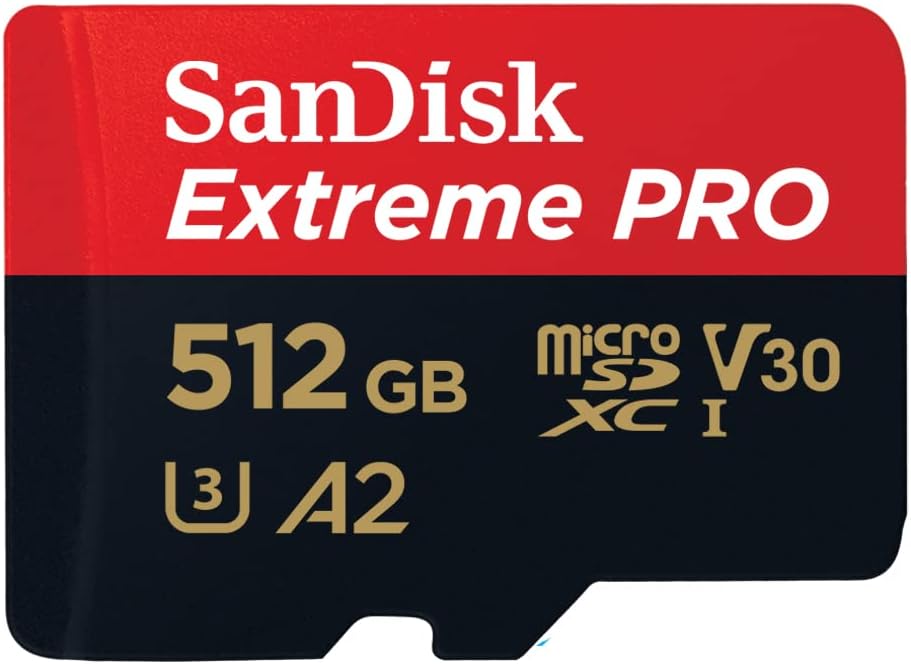
The SanDisk Extreme PRO microSDXC UHS-I Memory Card 512 GB + Adapter & RescuePRO Deluxe is the premium option in this guide. Its 4.8 rating, 512GB capacity, high advertised transfer rates, A2 rating, and U3 and V30 video classes combine extensive storage with advanced performance for demanding users.
We may earn a commission when you buy through this link, at no additional cost to you.
Read speeds reach 200MB/s and write speeds reach 140MB/s according to the supplied information. That makes the card suitable for quick transfers of large files and lossless 4K UHD recording with compatible smartphones and other hosts. The stated A2 standard can also support better app performance and faster charging workflows in compatible devices.
The package goes beyond the card itself by including an adapter and RescuePRO Deluxe. That recovery software can help retrieve deleted files in supported scenarios, although it should be treated as a recovery option rather than a substitute for regular backups. Actual transfer rates still depend on the camera, phone, drone, reader, cable, and host interface.
Choose the Extreme PRO when high capacity, fast transfers, advanced video classes, and recovery tooling are all important. It is well suited to serious mobile creators, action-camera users, drone operators, and professionals who want fewer card changes. Those with lighter needs may find the standard Extreme or Ultra families more appropriate.
U3 and V30 ratings make the card suitable for compatible 4K UHD workflows, while A2 supports responsive application use. These specifications offer a broader performance foundation than ordinary Full HD-oriented cards.
RescuePRO Deluxe can assist with recovering deleted files when files are not overwritten and recovery remains technically possible. Regular backups remain essential because no recovery utility can guarantee that damaged, overwritten, or permanently lost data will be restored.
We may earn a commission when you buy through this link, at no additional cost to you.
Choosing the best SanDisk microSD card means matching capacity and performance ratings to the device, files, and recording demands. The most important distinctions are sustained video class, application performance, transfer speed, endurance, and physical compatibility.
Capacity is often the first consideration because it determines how many photos, videos, applications, or files can remain on the card. A 32GB model is useful for light tasks or as a spare, while 128GB suits moderate Full HD collections and general phone expansion. The 256GB options provide a more comfortable balance for active phones, cameras, and tablets, and 512GB is attractive for extended 4K or 5K shooting, drones, action cameras, and professional media libraries. Estimate how much data you create per hour and add comfortable headroom rather than choosing exactly at the limit. Remember that actual usable capacity is lower than the advertised decimal figure because formatting, file systems, device reservations, and other factors affect free space.
Video speed classes indicate sustained minimum write performance rather than the card's maximum read speed. V10 is aligned with Full HD recording and appears on the Ultra cards in this guide. V30 indicates a sustained rate of 30MB/s and is used on the High Endurance, Extreme, and Extreme PRO options, making them more appropriate for compatible 4K workflows. U3 is a UHS performance option designed for real-time video recording with compatible UHS-enabled hosts. The V30 and U3 markings on Extreme and Extreme PRO cards are especially relevant to action cameras, drones, and high-resolution phones. Even when a card carries a suitable class, the host device must also support the target resolution, codec, bitrate, and file format.
Read speed governs how quickly files can be copied from the card, which matters when offloading large photo or video collections. Write speed influences how readily a camera can save incoming footage. The listed cards range from 120MB/s or 150MB/s read speeds in general-purpose options to 245MB/s on higher-end Extreme models, with stated write speeds reaching as high as 170MB/s. These are maximum figures that generally require compatible readers and host interfaces. Camera controllers and phone ports may deliver lower results, so choose a card that remains useful at realistic device speeds rather than focusing only on the largest headline number.
Phones and tablets that support movable applications may benefit from the A1 or A2 performance classes. A1 is designed to improve application launch and overall responsiveness on compatible devices, making it useful for the Ultra and compact 32GB options. A2 provides a higher random read and write performance target and appears on the selected Extreme and Extreme PRO cards. Application ratings do not determine video quality, and a faster class cannot overcome a slow device processor or storage interface. Check whether the phone supports the card format and application migration before buying specifically for app use.
Dash cams, home security cameras, and other always-recording systems should use a card designed for sustained writes rather than assuming every general-purpose card is equivalent. The High Endurance family is expressly designed for dash-cam and home-monitoring use and is described as capable of recording for up to 10,000 or 20,000 hours in applicable Full HD scenarios. Actual retention is lower and varies with resolution, bitrate, device behavior, and other factors. A card that merely supports high-resolution video is not necessarily optimized for constant overwriting, so match the card's endurance positioning to the recorder's duty cycle.
A microSD card must be supported in format, capacity, and speed class by the device that will use it. Some Android phones, cameras, drones, consoles, and security systems have explicit card requirements, while others may reject capacities above a particular limit. The original Nintendo Switch is listed as compatible with several cards in this guide, but Nintendo Switch 2 is explicitly excluded from those compatibility claims. Review the device manual or manufacturer's requirements before purchasing. Also consider physical format: microSD cards are tiny and easy to damage or lose, so the full-size adapters included with some products improve handling during transfers.
Extreme and Extreme PRO cards are described as resistant to a broad range of environmental hazards, including temperature, humidity, water, shock, drops, magnets, X-rays, and wear. High Endurance cards also list protection against temperature, water, shock, humidity, and magnets, subject to the stated card-only limitations. These features improve confidence when a card travels between action cameras, drones, vehicles, or outdoor devices. They do not make the card immune to loss, connector damage, data corruption, or removal during an active write operation. Protective cases and careful transfer routines remain important.
Several products include a full-size SD adapter, which is useful for laptops, cameras, and readers that accept standard SD cards. The Extreme PRO package also includes RescuePRO Deluxe, a recovery application that may help retrieve deleted files in supported situations. Compatible readers are mentioned for several cards and can unlock faster transfer performance, but readers are sometimes sold separately. Confirm what is physically included before purchasing so you know whether an adapter or reader is needed. Accessories are helpful, but capacity, endurance, and video compatibility should determine the purchase first.
Before inserting a new card, confirm that the device supports its format, capacity, and video class. Format the card in the host device when possible so the operating system can create the appropriate file system. Copy important files to the card before a recording session, and verify that the device recognizes the correct capacity. For a dash cam or security camera, check the recording settings, loop behavior, and maximum supported card size so footage retention matches your expectations.
Transfer large media collections with a compatible card reader and a reliable USB port or interface. Insert the card through the reader rather than removing it directly from a camera while files are still being written. Use the card's eject function and wait for the computer to confirm that the operation is complete before removing it. Keep a separate backup of irreplaceable photographs and footage, and use RescuePRO Deluxe only when supported files are damaged, deleted, or otherwise difficult to recover.
Protect the card from physical damage and abrupt removal. Store it in a clean, dry container when it is not in use, and avoid exposing contacts to dirt, moisture, or strong static discharge. Do not format the card while important files are being accessed, and periodically check recording health or available space on long-running cameras. When a card begins producing recording errors, corrupted files, or unrecognized devices, stop relying on it and move new recordings to a healthy card.
The High Endurance models are specifically positioned for dash cams and home monitoring because they are designed for continuous recording. The 256GB version offers more room before older footage is overwritten than the 128GB option. Check the camera's supported capacity and recording formats, and remember that actual retention is lower than the headline endurance figure and varies with resolution, bitrate, and device behavior.
An Extreme card is generally the stronger choice for demanding 4K or 5K recording, rapid transfers, and compatible application workloads. An Ultra card is more appropriate for everyday phone expansion, Full HD media, and lighter app use. The better option depends on your host device and workload because a higher-rated card cannot make an unsupported camera record at a higher resolution.
A1 and A2 are application-performance classes intended to improve random read and write responsiveness when compatible devices run applications from a card. A2 represents a higher performance target than A1. Results depend on the phone, application, interface, and workload, so the class is useful but does not guarantee identical speed across every device.
You need an adapter or reader only if your computer or other equipment lacks a microSD slot. Several SanDisk cards include a full-size SD adapter, while compatible USB readers may be required to achieve the highest advertised transfer rates. Use a reader and interface that support the card's UHS-I performance and connect it through a dependable port or cable.
The supplied information lists endurance of up to 10,000 hours for the 128GB model and up to 20,000 hours for the 256GB model in the applicable Full HD scenario. Actual recording time is lower and depends on 4K use, bitrate, file size, motion, and the recording device. The figures also represent endurance potential, not the amount of footage that can be stored simultaneously.
The supplied listings state compatibility with the original Nintendo Switch for the High Endurance cards and the 256GB Ultra with adapter. Those same listings explicitly say they are not compatible with Nintendo Switch 2. Confirm current manufacturer requirements and the console's supported capacity before purchasing.
Advertised speeds are maximum figures achieved with suitable cards, readers, cables, ports, and host devices. A camera or phone may use a slower interface, while USB port standards, background activity, file size, and card condition can also affect results. Compare files through a compatible high-speed reader to determine whether the limitation comes from the setup or the card.
No. Although these cards are designed to be portable and durable, removable media can still be lost, damaged, corrupted, or overwritten during continuous recording. Maintain a separate backup of irreplaceable files and transfer valuable footage to reliable storage. Use recovery software only as a supplemental tool because successful recovery cannot be guaranteed.
The SANDISK 256GB High Endurance with Adapter stands out as the Best Budget-oriented choice for dash cams and home monitoring, offering specialized endurance and practical capacity. The SANDISK 256GB Extreme with Adapter earns the Editor's Choice designation for its versatile combination of A2 performance, U3 and V30 video support, and fast transfers. The SanDisk Extreme PRO 512GB takes the premium position with generous capacity, high stated read and write speeds, 4K UHD capabilities, and RescuePRO Deluxe.
Prioritize the requirement your device imposes most clearly. Continuous recorders need a High Endurance card, Full HD and general expansion users can look to Ultra, and demanding 4K or 5K creators will benefit from an Extreme or Extreme PRO model. Capacity should be selected alongside speed and endurance, with enough space for expected footage and room for future files. Compatibility with the exact host device matters more than any isolated specification.
Before ordering, verify the card's supported capacity, required video class, and physical format in the device manual. Review the current retail pricing and availability, as both can change over time. Comparing the final specifications against your real workflow will produce a more satisfying result than simply choosing the card with the largest headline speed.


