
SureCall Outdoor Omni Antenna
5.0Editor score
617–2700 MHz wideband
Omnidirectional outdoor coverage
N-Female 50-ohm connection
Wall or pole mounting hardware
Our guide compares 10 Parabolic Antenna for Distant Cell Towers options, highlighting gain, line-of-sight needs, band support, MIMO, and installation factors.
A parabolic antenna can give cellular equipment a decisive advantage when a nearby tower is too far away, obstructed, or operating on a frequency that struggles inside your home. The best model must combine usable gain with the correct radio bands, tight directional targeting, and a practical way to connect it to a modem, hotspot, router, or booster.
This guide compares ten supplied products by examining frequency coverage, antenna architecture, connector arrangements, MIMO potential, mounting requirements, and suitability for reaching distant cellular towers. It also distinguishes purpose-built cellular models from satellite antennas, television antennas, and complete booster systems so readers can avoid choosing an incompatible product.
Each pick reveals what that product is best positioned to handle, from high-gain cellular line-of-sight installations to broad-band directional equipment and satellite reception. Product ratings and listed specifications inform the analysis, while prices and availability can change, so confirm current listing details before purchasing.
5.0Editor score

4.0Editor score

4.4Editor score
The comparison below evaluates each listed product by its real-world role, frequency range, directional characteristics, connection method, and practical installation considerations for cellular or related high-gain reception.


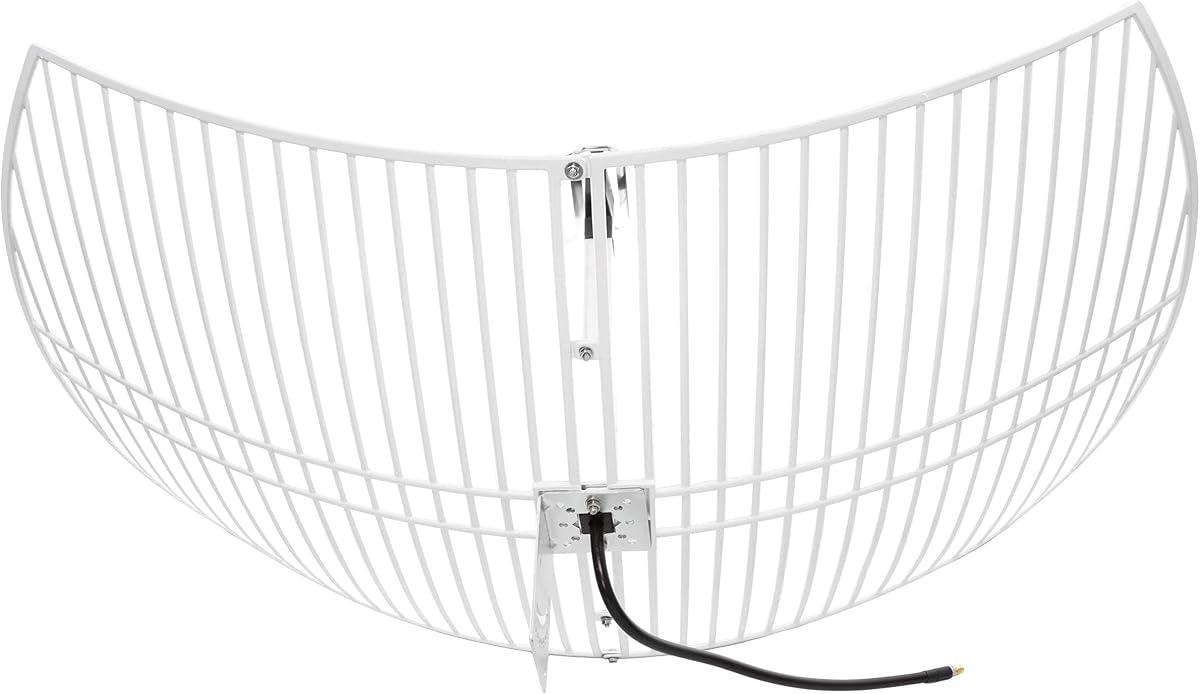



The Griddy Grid Parabolic Antenna Complete Kit is the most directly relevant product in this guide for a customer seeking a high-gain directional antenna to reach a distant cellular tower. Its listed 4.0 rating reflects a product with strong technical ambitions, particularly its 600–6500 MHz operating range and gain figures that rise from 12–17 dBi at lower frequencies to 23–26 dBi in the 3000–6500 MHz range. It is designed for LTE modems, hotspots, routers, Wi-Fi equipment, and compatible cellular boosters.
We may earn a commission when you buy through this link, at no additional cost to you.
The defining advantage is unusually wide bandwidth for a parabolic-style antenna. Griddy is not limited to one cellular generation or a narrow slice of spectrum. The supplied information states that it supports 4G LTE, 5G NR, and Wi-Fi, while its band-specific gain allows an installer to select a model that remains useful across widely separated frequencies. The complete version includes 50-ohm N-Type connectors along with TS9 and SMA adapters, reducing uncertainty about what interface the connected equipment requires.
There is an important trade-off: the dish concentrates energy into a narrow beam and therefore needs a clear view of the tower. Trees, buildings, terrain, and other reflective obstructions can disperse or redirect the signal, sharply reducing the practical benefit of its high nominal gain. The product also requires a compatible booster, LTE router, hotspot, or Wi-Fi access point with appropriate antenna ports. It is an antenna solution, not a self-contained cellular system that can improve reception by itself.
This kit is the strongest recommendation for a technically capable buyer who can identify a tower, establish sight of it, and connect the antenna to suitable radio hardware. It is particularly attractive when one antenna must work across cellular bands from low frequencies through several gigahertz. For users who already own the necessary equipment and value a ready-to-install package, the complete kit is more convenient than the antenna-only version.
The listed gain progression makes Griddy unusual among the products here: it combines lower-frequency coverage with substantially stronger performance at 3000–6500 MHz. That range can suit modern cellular and Wi-Fi equipment, provided the selected connector and radio system support the relevant band.
For a distant tower, precise aiming matters as much as raw gain. Griddy should be mounted where the unobstructed path to the tower is as short and direct as practical, because foliage, walls, and reflective structures can erase the narrow-beam advantage.
We may earn a commission when you buy through this link, at no additional cost to you.
The Griddy Grid Parabolic Antenna Antenna Only model shares the headline performance of the complete kit while offering a different purchasing proposition. It has a listed rating of 4.2, the highest among the two Griddy entries, and provides 12–17 dBi gain from 600–960 MHz, 20–23 dBi from 1700–2700 MHz, and 23–26 dBi from 3000–6500 MHz. Its purpose is direct connection to compatible radio hardware rather than a bundled all-in-one installation package.
We may earn a commission when you buy through this link, at no additional cost to you.
This option makes sense for buyers who already own suitable coaxial cable, adapters, a booster, or an LTE-capable router. It supports 4G LTE, 5G NR, and Wi-Fi, and the listed description encourages customers with multiple external antenna ports to use two or four Griddy units to realize the benefits of MIMO. A single dish may help one link, while a coordinated multi-antenna arrangement is more appropriate when the receiving system expects spatial diversity.
The antenna-only format places more responsibility on the installer. A complete kit may be more convenient for a first-time user, while this version offers flexibility for a custom run, an existing wiring plan, or a multi-dish MIMO project. However, even a high-quality dish cannot compensate for an obstructed path. The supplied description explicitly warns that reflection or dispersion through trees and buildings makes Griddy much less effective.
Choose the antenna-only version when you have compatible equipment and want control over the rest of the installation. It is a strong candidate for technically confident buyers building a carefully aimed, multi-band cellular link. The complete Griddy kit is the safer general recommendation for anyone who wants a more self-contained package and included adapters.
Buying the antenna alone lets you select cable length, adapter type, mounting position, and the number of dishes required by your cellular system. That flexibility is useful for existing installations but requires more assembly and planning.
The stated support for two- or four-unit setups does not mean multiple dishes automatically improve every connection. Your modem or router must support multiple external antenna connections, and each antenna must be positioned and oriented consistently.
We may earn a commission when you buy through this link, at no additional cost to you.
The Nooelec GOES Weather Satellite Mesh Antenna is a 21 dBi parabolic antenna centered at 1.7 GHz, with a bandwidth exceeding 200 MHz. It is technically impressive, includes an LMR400 feed cable with a male SMA connector and mounting hardware, and carries a 4.0 rating. Its stated purpose, however, is receiving images from orbiting weather satellites rather than connecting to terrestrial cell towers.
We may earn a commission when you buy through this link, at no additional cost to you.
The product is intended to work with an RF system containing components such as an SDR, filter, and low-noise amplifier. It can handle both linearly and circularly polarized signals, including right-hand and left-hand circular polarization. That makes it relevant to GOES HRIT and LRIT, NOAA HRPT, Meteor M2 HRPT, Metop, FengYun, and other satellites operating near 1.6–1.8 GHz. Software such as SatDump is required to decode the resulting imagery.
Its high gain and parabolic form may superficially resemble what a cellular buyer wants, but frequency compatibility alone is not enough. Cellular access requires operation on the channels used by the target carrier, suitable transmit or receive filtering, correct duplexer and amplifier arrangements where applicable, and a radio system designed for terrestrial networking. The listed antenna is optimized for satellite downlink reception and should not be assumed to support the broader MIMO and carrier combinations expected of a cellular installation.
This is an excellent specialist satellite antenna, but it is not a sensible substitute for a cell-tower dish. Choose it when your goal is real-time weather imagery and you already understand the associated SDR and decoding workflow. For cellular connectivity, return to the Griddy models or another antenna explicitly designed for the relevant cellular bands.
The 1.7 GHz center frequency and support for circular polarization align the antenna with orbiting weather-satellite downlinks. Its primary value is obtaining detailed, high-resolution imagery through a compatible SDR, filter, and decoding setup.
An LMR400 feed and included mounting hardware simplify physical deployment, but the antenna still needs compatible radio equipment and software. Without the proper receiver chain and decoding tools, the signal cannot be turned into usable imagery.
We may earn a commission when you buy through this link, at no additional cost to you.
The Nooelec Satellite Mesh Antenna Bundle offers a 20 dBi parabolic antenna centered at 1.4 GHz and covering more than 300 MHz of bandwidth. Its listed 4.4 rating reflects a well-regarded specialist product, while its stated uses include Inmarsat, Iridium, Hydrogen Line, satellite communication, remote sensing, and weather tracking. It is a fixed-position satellite receive antenna, not a terrestrial cellular tower antenna.
We may earn a commission when you buy through this link, at no additional cost to you.
A sub-reflector supports enhanced performance, and the supplied LMR400 coaxial feed terminates in SMA for straightforward connection to compatible radio equipment. The arm and attached cable simplify assembly, while the included mounting kit can adapt to different installation situations. Its stated suitability as a stationary antenna is important because a narrow satellite beam must remain accurately pointed after wind, settling, or hardware movement.
The broad bandwidth is attractive for L-band applications, but cellular networks use a very different set of radio requirements. A customer may encounter a cellular band near this frequency, yet the antenna's gain curve, polarization, matching, noise characteristics, and system integration were not presented as cellular-tower specifications. Connecting it directly to a cellular modem would therefore be speculative. A terrestrial cellular antenna also needs to account for the carrier bands, signal direction, and any MIMO ports used by the receiving router.
This Nooelec bundle is best for satellite communication and remote-sensing enthusiasts with suitable L-band equipment. It can be a valuable parabolic antenna within its intended category, but it does not satisfy the core requirement of reaching a distant cell tower. Buyers should judge it as a satellite product and choose a cellular-specific model for that installation.
The 300 MHz-plus bandwidth encompasses many popular L-band applications, giving the antenna more flexibility than a narrowly tuned single-satellite dish. Exact system performance still depends on the connected receiver and the selected service.
Satellite signals arrive from a precise location, so the supplied mounting kit and stable feed arrangement are important. A cellular tower installation may have different aiming demands, but it still benefits from a rigid mount that prevents the beam from drifting.
We may earn a commission when you buy through this link, at no additional cost to you.
The Waveform QuadPro is a directional 4×4 MIMO panel antenna rather than a parabolic dish, but it is one of the most practical products here for a customer seeking a stronger directional cellular connection. It has a 4.4 rating, covers 600–6000 MHz, supports every listed 4G and 5G band from major U.S. carriers, and provides up to 9.1 dBi gain while supporting full 4×4 MIMO operation.
We may earn a commission when you buy through this link, at no additional cost to you.
Its complete-kit approach is a major strength. The package includes a Window Entry Cable, FlexMount, UltraFlex-Quad cable, weatherproofing boots, SMA and U.FL adapters, and an installation guide. The Window Entry Cable is intended to reduce the need to drill holes through a home. Detailed guidance is also stated for T-Mobile Home Internet gateways, Verizon 5G Home Internet, and AT&T Internet Air, which makes it especially relevant to fixed wireless broadband users.
QuadPro is not a parabolic antenna, and its lower stated maximum gain should be considered carefully when the tower is extremely distant. Directionality still requires the panel to be aimed at the nearest tower, and walls, terrain, and trees can reduce effectiveness. The trade-off is that the panel architecture and comprehensive four-port MIMO design may provide a more balanced, practical cellular installation than attempting to deploy multiple high-gain dishes without the correct antenna hardware and coordination.
This is the premium choice for a homeowner with a compatible cellular gateway, especially one using 4×4 MIMO. Choose it when easy window routing, broad carrier support, and complete accessories matter more than owning a traditional parabolic reflector. For a genuine high-gain dish where clear line-of-sight is available, the Griddy models deserve consideration instead.
The four-by-four MIMO support targets the kind of multi-link cellular systems used by modern fixed wireless broadband. It is a better functional match for those gateways than a single, non-MIMO satellite receive dish.
Including the FlexMount, window-entry cable, flexible Quad cable, adapters, boots, and instructions reduces the number of separate parts needed. That convenience can outweigh the desire for a parabolic reflector in a residential installation.
We may earn a commission when you buy through this link, at no additional cost to you.
The SureCall Flare 3.0 is a complete cell signal booster for homes and offices rather than a stand-alone parabolic antenna. It supports 5G and 4G LTE, works with major U.S. carriers, includes an outdoor Yagi antenna, and can improve calls, texts, and data for multiple phones, tablets, and hotspots. Its listed rating is 3.6, the lowest among the products in this guide.
We may earn a commission when you buy through this link, at no additional cost to you.
The major advantage is integration. A user does not need to select a separate router, understand RF accessories, or configure an antenna interface. SureCall's app helps guide aiming and setup, while the stated indoor coverage ranges from about 500 square feet with one or two outdoor bars to approximately 3,500 square feet with five outdoor bars. This makes the system approachable for households that want improved indoor cellular service rather than a specialized fixed-wireless link.
The essential limitation is equally clear: the booster requires usable outdoor signal. It amplifies what it receives at the outdoor antenna and distributes that signal indoors; it does not create a cellular signal where none can be detected. Indoor coverage therefore depends on the outside signal at the chosen antenna location. The Yagi antenna is directional and should be aimed toward a usable tower, but its design and stated system coverage differ from the high-gain parabolic options in this guide.
Flare 3.0 is best for multi-user indoor coverage in a home or small office with at least modest outdoor cellular service. Buyers whose goal is to reach a very distant tower directly may prefer a high-gain directional antenna and compatible modem, but those seeking a simple, all-in-one solution will find this system easier to deploy.
The outside signal determines what the system can realistically distribute inside. Place the outdoor unit where it receives the strongest stable signal, rather than choosing a location solely for convenience or cable length.
Supporting phones, tablets, and hotspots at once makes the booster useful for families and small offices. The included app guidance also reduces the trial-and-error involved in finding a tower and orienting the antenna.
We may earn a commission when you buy through this link, at no additional cost to you.
The SureCall Fusion4Home is a cellular booster system designed to improve 5G and 4G LTE reception across a larger home. Its stated indoor coverage reaches up to 5000 square feet, and the listed 3.9 rating places it in the middle of this product group. It uses an outdoor Yagi-panel antenna and supports phones, tablets, hotspots, and other cellular devices simultaneously.
We may earn a commission when you buy through this link, at no additional cost to you.
The product's patented extended-range approach is described as amplifying the signal outside the building at its strongest point, with the goal of creating better indoor coverage and stronger connections to distant towers. Compatibility includes AT&T, T-Mobile, Verizon, US Cellular, Mint Mobile, and Boost Mobile. It is also stated to work without Wi-Fi or a monthly subscription, making it a straightforward alternative for improving cellular service throughout a home.
This is not a parabolic antenna and should not be evaluated as if it were. The included Yagi-panel design focuses reception toward the carrier tower, while the complete booster handles amplification and indoor distribution. Like other booster systems, it depends on receiving an existing outdoor signal; it cannot overcome the absence of service at the outdoor antenna. Placement, aiming, cable routing, and regulatory compliance all influence the result.
Fusion4Home is a sensible pick for a larger residence or home office that needs to support several cellular devices and wants one integrated package. A buyer seeking a narrow high-gain link for a router or hotspot should choose a dedicated directional antenna with compatible electronics. For shared indoor coverage, however, this system removes much of the complexity.
The stated coverage of up to 5000 square feet targets installations where an indoor device may sit far from a window-mounted or desk-mounted modem. Actual results still depend on the outdoor signal, building materials, and system placement.
The booster distributes cellular service throughout the coverage area, so family members can use phones, tablets, and hotspots without each device requiring its own external antenna. This is its main advantage over a single-router antenna solution.
We may earn a commission when you buy through this link, at no additional cost to you.
The SureCall SC-588W is an outdoor ultra-wideband omnidirectional antenna covering 617–2700 MHz and 2G, 3G, 4G, and 5G signals. It has a 5.0 rating, the highest listed score in this guide, and uses a 50-ohm N-Female connector. Its mounting hardware accommodates poles from 1.5 to 2.0 inches in diameter as well as wall installation.
We may earn a commission when you buy through this link, at no additional cost to you.
The antenna offers 1.5, 2, or 4 dBi maximum gain depending on frequency. Its omnidirectional radiation pattern removes the need to identify and precisely track one tower, which is useful where the strongest carrier signal comes from different directions or where the installation must serve several bands. It is also a practical antenna for connecting to a compatible booster through the separately sold SC-400 cable.
For a truly distant tower, an omnidirectional pattern has an inherent disadvantage. It accepts energy from every direction rather than concentrating reception toward a narrow target. A high-gain parabolic or directional Yagi can usually offer a stronger link in a clear line-of-sight direction, though it requires more accurate alignment. The SC-588W prioritizes simplicity, broad compatibility, and freedom from constant adjustment rather than maximum reach in one direction.
This is an excellent budget choice for a booster installation in an area with several towers or uncertain tower direction. It is less appropriate when you know one distant tower is the target and can maintain a precise line of sight. In that situation, invest in a directional parabolic model and compatible radio hardware for a stronger received signal.
Because the antenna radiates omnidirectionally, it does not need to be turned whenever a different tower becomes preferable. That convenience is especially valuable when several carriers or bands are involved.
The listed package includes mounting hardware but not the SC-400 cable. Confirm the booster's connector requirements and cable length before installation so the antenna can be mounted where it receives the best usable signal.
We may earn a commission when you buy through this link, at no additional cost to you.
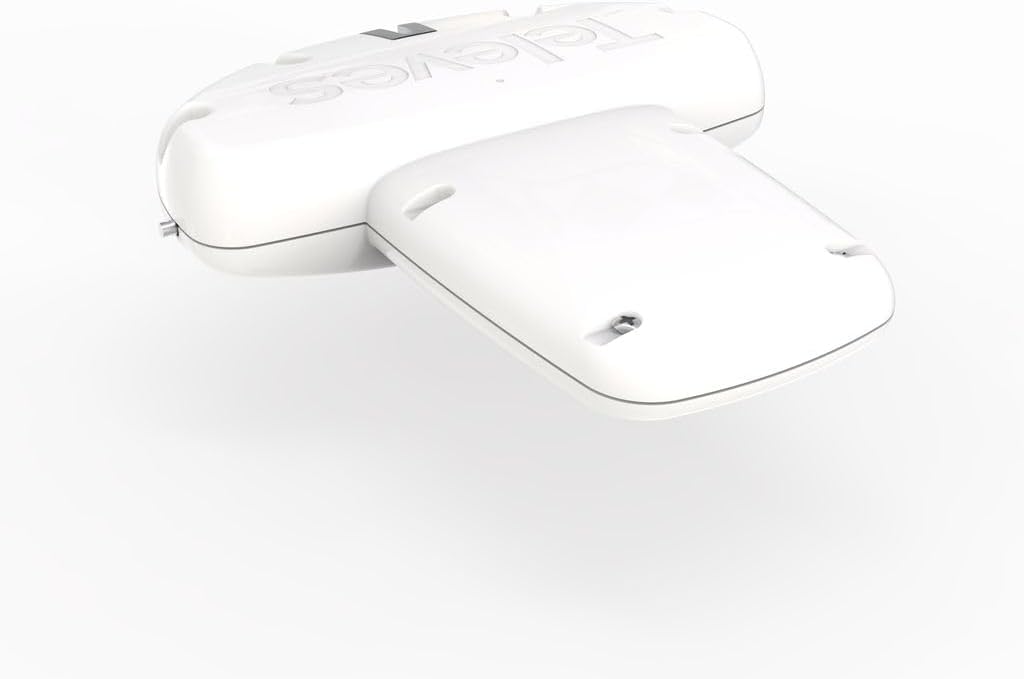
The Televes DiNova Boss Mix is a directional HDTV antenna, not a cellular parabolic antenna. It has a 4.4 rating and provides automatic amplification for High VHF and UHF broadcast reception, with stated gains of 29 dBi and 34 dBi respectively. Its seven-element UHF microstrip array and High VHF elements focus reception toward broadcast towers, making it useful for remote television stations.
We may earn a commission when you buy through this link, at no additional cost to you.
Integrated filtering for FM, LTE, 4G, and 5G helps reduce interference from cellular transmitters and FM radio, which is especially valuable in crowded radio environments. The BOSS-Tech system adjusts amplification independently by band, seeking stable output without weak reception or overload. A weather-resistant ABS radome and Zamak mounting components permit rooftop, wall, balcony, or attic placement. It also continues passing signals in passive mode if power is unavailable.
The filtering feature should not be confused with cellular reception capability. The antenna is designed to receive broadcast television channels, and its stated 50-mile range applies to TV transmitters under suitable conditions. It lacks the appropriate cellular MIMO architecture, radio interfaces, and stated support for carrier networks. Connecting it to a cellular modem would not turn the listed television specifications into a usable cellular link.
Choose the DiNova Boss Mix for long-range HDTV reception in an area with cellular interference, especially where its low-profile appearance is useful for an attic or exterior. It deserves consideration in a broader high-gain antenna context, but for a distant cell tower, the Griddy or Waveform products are much closer to the required application.
Independent adjustment for High VHF and UHF allows the antenna to adapt as reception conditions change. The design seeks to improve weak signals while reducing the chance that stronger channels overload the amplifier.
The integrated filters are designed to reject interference that could disrupt television reception. They do not provide an antenna tuned to cellular uplink and downlink bands for a router or booster.
We may earn a commission when you buy through this link, at no additional cost to you.
The Televes DAT BOSS Mix LR is a professional-style long-range television antenna designed for difficult fringe reception. It has a 4.5 rating, the highest among the broadcast-oriented products in the guide, and uses a stacked triple-boom design with multiple directors and reflectors. Stated band-specific gains reach 38 dBi for High VHF and 46 dBi for UHF, with a listed reception range of up to 100 miles.
We may earn a commission when you buy through this link, at no additional cost to you.
Its intelligent gain control adjusts amplification independently by band, while integrated FM and cellular filtering helps protect television reception from nearby interference. The listed front-to-back ratios are 12 dB for High VHF and 25 dBi for UHF. Construction includes aluminum elements, stainless-steel hardware, and durable ABS plastics intended to withstand rain, humidity, and ultraviolet exposure. The package includes a UL-listed power inserter, mast clamps, wrench, and weather boot.
Although its combination of gain, directivity, and rejection resembles what a distant-tower installation needs, the operating purpose remains television reception. The product is optimized for U.S. broadcast frequencies under 608 MHz and includes filters above that region to reduce LTE, 4G, and 5G interference. It is not presented as a cellular receive antenna, does not include cellular MIMO interfaces, and should not be connected directly to a cellular router.
This Televes model is the right selection for a rural home seeking HDTV stations from distant transmitters. It demonstrates how effective a carefully engineered directional array can be, but cellular users should choose equipment explicitly designed for carrier bands and MIMO. Among the listed choices, the Griddy dishes provide the closest match to a high-gain parabolic cellular solution.
The stacked triple-boom layout concentrates reception toward broadcast transmitters while limiting unwanted signals from behind. The stated front-to-back performance helps preserve signal quality in environments where reflections and competing transmitters are common.
Aluminum elements, stainless-steel hardware, mast clamps, and a weather boot support a robust rooftop installation. The dual powered-and-passive operating mode also provides a fallback when the power inserter is unavailable.
We may earn a commission when you buy through this link, at no additional cost to you.
Choosing the right antenna requires separating gain from compatibility, calculating the installation challenge, and matching the antenna to the cellular equipment that will actually use it.
Start with the bands used by your carrier and the capabilities of the modem, router, hotspot, or booster. The Griddy products cover 600–6500 MHz, while the Waveform QuadPro spans 600–6000 MHz; the SureCall SC-588W covers 617–2700 MHz. These ranges are useful indicators, but a wide printed range does not guarantee that every internal cellular band receives equal performance. Check the equipment's supported bands and connector requirements before making a final decision.
Prioritize an antenna explicitly described for cellular use whenever the goal is a cell tower connection.
Nominal gain becomes more valuable as the tower grows more distant, especially when a reliable path exists. Griddy states 12–26 dBi across its supported bands, whereas QuadPro lists up to 9.1 dBi and the SC-588W offers 1.5–4 dBi. These are different antenna architectures serving different needs. A narrow high-gain beam can beat a broad omni pattern in one direction, but it cannot overcome the absence of a viable line-of-sight path.
Choose the largest practical gain that your installation can aim accurately and maintain.
A parabolic or directional antenna concentrates energy in a narrow beam. Before mounting one, use a suitable cellular signal application or another reliable method to determine where the strongest usable tower lies. Account for tower sectors, carrier differences, nearby buildings, and possible changes in network conditions. The supplied Griddy guidance repeatedly emphasizes line of sight, while QuadPro similarly requires aiming toward the nearest tower.
Confirm the target direction before drilling, climbing a roof, or running cable.
Trees, terrain, walls, glass, and reflective structures can block or disperse a high-gain signal. The Griddy descriptions specifically warn that trees and buildings reduce effectiveness, and the same physics applies to other directional antennas. An attic or window installation may be convenient, but it can also introduce substantial loss. Whenever practical, mount the antenna outdoors with a short, clear path toward the tower.
If the direct path is obstructed, investigate alternatives before purchasing a higher-gain dish.
A modern cellular gateway may use multiple antenna chains, and a single antenna cannot provide all benefits of a proper MIMO arrangement. Griddy states that two or four units can be used with MIMO-compatible devices, while Waveform QuadPro is specifically designed around 4×4 MIMO. Check the number of external antenna ports, the expected connector type, and whether the modem or router supports the planned configuration. More antennas are not automatically better if the receiver does not support them.
Design the antenna system around the receiving device, not around antenna count alone.
The complete Griddy kit includes 50-ohm N-Type connectors plus TS9 and SMA adapters. The antenna-only Griddy includes N-Type connectors but requires the appropriate adapter and cable. The SureCall SC-588W uses an N-Female connection and lists SC-400 cable as a separate item. Nooelec satellite products use LMR400 feeds with SMA connectors, but that connector standard alone does not make them cellular compatible.
Make a short connector list before ordering and include any required adapters or cable.
A stand-alone antenna serves one router or receiver, while a booster system distributes a cellular signal to multiple phones and devices throughout a building. The SureCall Flare 3.0 and Fusion4Home are complete indoor-boosting solutions with outdoor directional antennas. The Griddy products are high-gain external antennas requiring compatible downstream electronics. Decide whether the objective is a faster fixed wireless connection or improved cellular service for everyone in the home.
Choose a complete booster for multi-device indoor use and an external antenna for a targeted connection.
A secure mount, weather-resistant connections, manageable cable runs, and access for adjustment are as important as gain. Wide parabolic surfaces can experience wind loading, while mast-mounted antennas need to resist movement that changes alignment. Griddy includes N-Type connectors and mentions appropriate adapters; Waveform includes a FlexMount, window-entry cable, and weatherproofing boots; the Nooelec models include mounting hardware.
Account for weather exposure, roof access, cable routing, and future realignment before finalizing.
Begin by identifying the target tower and the equipment that will connect to the antenna. Verify supported cellular bands, connector type, MIMO requirements, and any amplification or filtering components recommended by the equipment manufacturer. Mount the antenna outdoors at the point offering the clearest possible path toward the tower. A higher mounting location may improve the view, but it should not be selected if the roof area, hardware, or future access is unsafe.
Connect the antenna using the specified 50-ohm cable and adapters, keeping the run as short and well supported as practical. Avoid sharp bends, crushed coax, loose fittings, and unprotected cable sections. Route indoor cables through a suitable entry point, using weatherproofing where they penetrate exterior walls. For a window installation, ensure the window can remain closed and that the equipment does not create an avoidable moisture or heat problem.
Power up the connected router, hotspot, modem, or booster and compare performance before and after installation. Adjust the antenna in small increments while monitoring the relevant signal and throughput measurements. Once performance stabilizes, mark the mount position and tighten all hardware. Periodically inspect the mast, connectors, cable, weather seals, and antenna surface for looseness, corrosion, water ingress, or storm damage, and realign the antenna if a severe event changes its position.
Yes, a clear or nearly clear path to the tower is essential for a high-gain directional antenna. Trees, buildings, hills, and reflective structures can absorb, scatter, or redirect the narrow radio beam. The supplied Griddy guidance is especially explicit on this point, noting that dispersion or reflection through trees and buildings reduces effectiveness. Mount the antenna outdoors and aim it directly at the selected tower whenever practical.
The antenna must support the relevant frequencies and the connected equipment must operate on those bands. Griddy states support for 4G LTE, 5G NR, and Wi-Fi across its 600–6500 MHz design, while Waveform supports major U.S. cellular carriers across 600–6000 MHz. Compatibility of the radio equipment, connectors, adapters, and network bands must all be confirmed before installation.
No. A parabolic antenna concentrates energy toward a narrow target and can provide a stronger distant-tower link when correctly aimed. An omnidirectional antenna distributes energy around a full circle, making it easier to use when tower direction is uncertain or several carriers and bands are present. The SureCall SC-588W prioritizes that convenience, while Griddy prioritizes high directional gain.
The correct number depends on the modem or router and its supported MIMO configuration. The Griddy description discusses using two or four units when the device has multiple external antenna connections, and Waveform QuadPro is explicitly a 4×4 MIMO panel. Check the receiving device documentation, use matching antennas, and position each one so it receives the strongest signal rather than installing extra units without a clear technical purpose.
It is generally not advisable without explicit technical support from the manufacturer. The Nooelec GOES and Satellite Mesh antennas are designed for narrowband satellite reception, including specialized filtering and polarization considerations. Cell towers require compatible cellular bands, matching, MIMO behavior, and radio interfaces. These satellite antennas should remain within their stated weather-satellite and L-band applications.
Yes. The SureCall Flare 3.0 and Fusion4Home amplify an outdoor cellular signal and distribute it indoors; they do not create usable service where no signal can be received. Place the outdoor antenna where it detects a stable signal and point it toward the relevant tower. Coverage claims should therefore be evaluated according to the signal strength at the outdoor installation point.
The connector depends on the antenna and the device or booster to which it connects. Griddy uses 50-ohm N-Type connectors and includes TS9 and SMA adapters with the complete kit. The SureCall SC-588W uses N-Female and lists SC-400 cable separately. The Nooelec models use LMR400 feeds with SMA connectors. Confirm every interface before ordering, and use suitable 50-ohm coax for cellular installations.
Mount the antenna securely, aim it at the tower, and make small adjustments while watching signal quality and real-world throughput. Once performance is satisfactory, mark the position and lock the hardware. High-gain dishes are sensitive to movement, so check the mount and weatherproof connections periodically and realign after severe weather or any maintenance that alters the antenna's position.
The Griddy Grid Complete Kit is the strongest all-around choice for a genuine cellular parabolic installation because it combines wide 600–6500 MHz coverage, high band-specific gain, included adapters, and support for MIMO arrangements. The antenna-only Griddy offers similar core performance for builders who already have the necessary cable and adapters. For a broader cellular architecture, Waveform QuadPro is the premium option when full 4×4 MIMO and a complete fixed-wireless installation kit matter more than a traditional dish.
Before purchasing, prioritize compatibility, an unobstructed tower path, and alignment with the receiving equipment. A nominally powerful antenna is ineffective if it covers the wrong bands, uses the wrong connector, or points through trees and buildings. Decide whether the goal is one high-speed cellular link or indoor service for many devices, then match the antenna or complete booster system to that requirement rather than choosing solely on stated gain.
Ratings, specifications, and product availability can change, and current prices should be checked on each listing before ordering. Review the included accessories carefully, confirm connector compatibility with your equipment, and verify current installation guidance. With those checks completed, you can select a system that makes the most of a distant tower instead of merely adding another antenna to an already limited connection.