
TR90 Kids Blue Light Glasses
4.6Editor score
Wide age range
TR90 flexible frame
Anti-glare and UV400
Our blue light filter glasses for kids guide compares 10 options for comfort, fit, lens protection, durability, style, and suitability across ages and screen
Blue light filter glasses for kids can make screen-heavy days feel more comfortable by reducing glare and filtering high-energy visible light from digital devices. The right pair should also be lightweight, durable, appropriately sized, and easy for a child to wear without pressure or constant adjustments.
We compared ten pairs using the supplied product details, focusing on lens protection, frame materials, age guidance, dimensions, anti-glare features, comfort, and everyday versatility. The list covers schoolwork, gaming, video calls, reading, travel, and outdoor use, with options for different budgets and preferences.
Each review explains the strongest reasons to consider a model, along with any limitations visible in its specifications. The top selections highlight three distinct priorities: broad value, a well-rounded feature set, and premium construction. Product availability and prices can change, so confirm the current listing and fit before buying.
4.6Editor score

4.6Editor score

4.7Editor score
The comparison below places all ten options side by side, emphasizing the details that matter most to parents: age guidance, frame construction, lens features, fit aids, and intended screen activities.


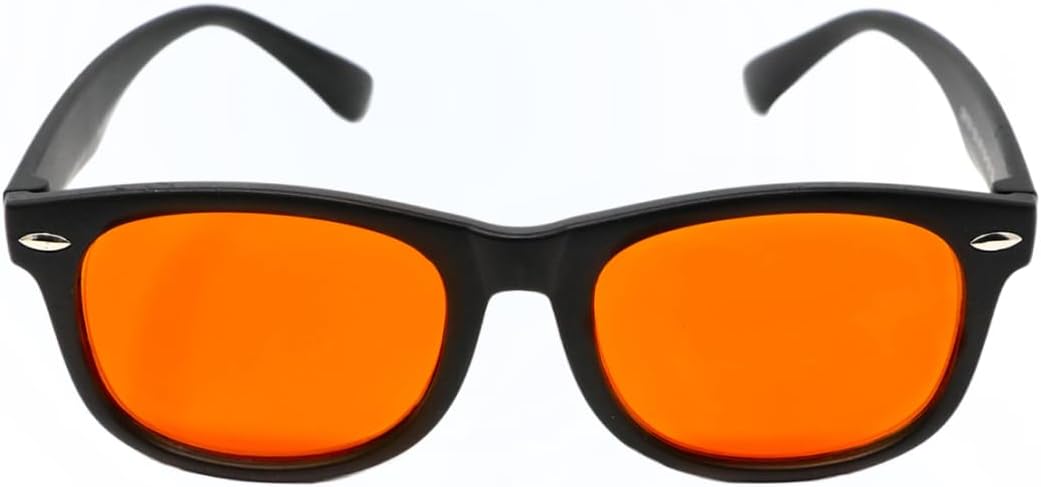


This model combines blue light filtering with UV protection in a lightweight, flexible frame intended for children ages 3-9. It holds a 4.6 rating and stands out for its balanced approach: the lenses target high-energy blue rays from digital screens, while the frame focuses on pressure-free comfort during extended use.
We may earn a commission when you buy through this link, at no additional cost to you.
The flexible spring construction is especially useful for active children because it allows the glasses to flex rather than relying on a rigid frame. Skin-friendly, lightweight materials support all-day wear, and the classic shape is intended to work with different face types. That makes the pair suitable for schoolwork, gaming, television, online learning, and travel.
Its main limitation is that the listed age range is centered on younger children, so older children with larger faces may need a better-established fit. The product information also does not provide exact lens or temple measurements. Those details matter when comparing fit precisely, especially for children whose proportions vary considerably.
This is a strong all-around recommendation for parents seeking a flexible, stylish pair without specialized accessories. It covers the essentials well: screen protection, glare reduction, a child-friendly fit, and a design intended for regular use across home, school, and travel.
The skin-friendly, ultra-lightweight frame and flexible spring hinges are designed to reduce pressure around the nose and ears. Those qualities are especially helpful during long online classes, gaming sessions, and streaming.
A classic shape gives the glasses broad appeal for school, home, and travel. The flexible construction can also make the transition between age groups easier than a pair built with highly rigid materials.
We may earn a commission when you buy through this link, at no additional cost to you.
The FANNYGO three-color set is a practical choice for children who want more than one frame to rotate. It carries a 4.6 rating and uses a bendable TR90 frame designed to withstand active daily schedules. The set includes black, dark blue, and light blue options for studying, gaming, and everyday indoor activities.
We may earn a commission when you buy through this link, at no additional cost to you.
One of its strongest advantages is the level of sizing information supplied. It is intended for ages 3-10, with lenses measuring 124mm wide by 41mm high and temples measuring 127mm. Elastic temples help the glasses remain in place, which can be useful for children who frequently lean forward, run around, or adjust their eyewear.
The product details do not list an explicit UV rating or mention prescription compatibility. That makes it better suited to shoppers who want dedicated nonprescription computer eyewear rather than a full replacement for prescription eyewear. Parents should also compare the stated dimensions with the child's head and face.
The multi-color format makes this an appealing pick for siblings, changing preferences, or keeping a spare at home. It is especially suitable for families seeking a light, flexible frame with clear age and measurement guidance for children ages 3-10.
Having black, dark blue, and light blue frames allows a child to rotate colors according to mood or setting. It also makes the purchase more practical if one pair is left at school or home.
The listed lens width, lens height, and temple length allow parents to compare this set with other fitted frames. Checking these measurements can reduce the chance of choosing eyewear that feels oversized or slides constantly.
We may earn a commission when you buy through this link, at no additional cost to you.
The ANYLUV youth gaming glasses provide blue light filtering, UV protection, and a lightweight frame intended for children with active lifestyles. They hold a 4.6 rating and distinguish themselves through their ability to serve both digital activities and outdoor environments, which broadens their use beyond a desk.
We may earn a commission when you buy through this link, at no additional cost to you.
Soft, lightweight materials are intended to limit discomfort during homework or other extended activities. The product information also emphasizes durable construction, making the glasses a sensible option for children who are likely to drop them or use them during busy school and recreation periods.
A clear weakness is the absence of a stated age range and exact frame dimensions. Without those details, parents cannot quickly tell whether the glasses are proportioned for a small child, a school-age child, or a teenager. The supplied information also does not mention fit accessories such as elastic temples or adjustable nose pads.
Despite that uncertainty, ANYLUV is a good fit for families seeking one pair that transitions from schoolwork and gaming to outdoor adventures. Its combination of screen filtering, UV protection, and child-friendly durability gives it broader environmental appeal than many screen-only alternatives.
UV protection makes the pair relevant beyond tablets and computers. It can remain in the rotation during outdoor play, where screen-specific glasses would offer less practical value.
The stated lightweight materials and soft construction are useful for children who wear glasses throughout school and play. A comfortable frame is more likely to stay on during a long homework or gaming session.
We may earn a commission when you buy through this link, at no additional cost to you.
This age 2-18 listing offers one of the broadest intended uses in the roundup. It has a 4.6 rating, combines blue light blocking with anti-glare and UV400 protection, and uses a lightweight TR90 frame described as unbreakable. That combination makes it appealing for families seeking a single pair that can serve children at different stages.
We may earn a commission when you buy through this link, at no additional cost to you.
The frame is designed for smaller faces, and the product details emphasize comfort during homework, gaming, video calls, and general screen use. Playful styling may encourage children to wear the glasses consistently, while the flexible material should tolerate the bending and handling associated with active daily use.
The very broad age range needs careful interpretation. A design that accommodates ages 2-18 is unlikely to fit every child equally well, and no exact lens or temple measurements are provided. The listing also describes the frames as coming in fun styles, but it does not identify the specific options available for each color or design.
For shoppers seeking a flexible, budget-conscious pair with useful protection, this remains a compelling option. Parents should verify the fit on the listing and confirm that the available style appeals to their child rather than relying on the age range alone.
The stated TR90 construction is flexible and described as unbreakable, making it well suited to bags, desks, sports bags, and other places where glasses receive rough handling.
The listed age 2-18 range offers exceptional flexibility for families with more than one child. Still, the absence of exact measurements means hands-on fit checking remains important.
We may earn a commission when you buy through this link, at no additional cost to you.
The DefenderShield Kid Series is the strongest premium-oriented option in the group, with the highest supplied rating at 4.7. Its defining features are premium optical lenses, shatterproof CR-39 construction, an anti-glare coating, a flexible silicone frame, and removable adjustable silicone ear hooks.
We may earn a commission when you buy through this link, at no additional cost to you.
The removable hooks are particularly useful because they can improve stability during long study sessions, online learning, and gaming. The ability to remove them also makes the glasses easier to manage during travel or when a lighter fit is preferred. The anti-glare coating adds another layer of protection against distracting reflections from screens and surrounding light.
The trade-off is that this model sits in a more premium tier than basic plastic alternatives, and the product information does not provide a specific age range. Families would need to judge the fit from the listing rather than from a published age guide. The purple designation also makes it a more specific style choice than the neutral frames in the roundup.
This is the recommendation for parents who prioritize lens construction, anti-glare treatment, and a secure adjustable fit over the lowest purchase cost. Its focus on schoolwork, virtual classrooms, gaming, and travel makes it a versatile premium choice for a child who wears screen glasses for long stretches.
Removable, adjustable silicone ear hooks help hold the glasses in place when a child leans toward a screen or moves around during online classes. They can be removed when a less secure fit is preferred.
Shatterproof CR-39 lenses and an anti-glare coating give this model a more substantial feature set. The coating is designed to minimize reflections that can distract during digital work or gaming.
We may earn a commission when you buy through this link, at no additional cost to you.
The SEEAFUN set combines kid-focused blue light glasses with a more generous accessory package. It has a 4.7 rating, targets children ages 3-12, and includes a mini car case, blue-light test card, miniature screwdriver, adjustable elastic strap, and cleaning cloth.
We may earn a commission when you buy through this link, at no additional cost to you.
Its transparent lens is promoted as blocking the stated 400-440nm blue-light range while maintaining high transmittance and low color difference. The frame uses flexible, ultra-lightweight TR90 material intended to avoid pressure on the nose and ears. UV400 protection adds outdoor relevance, while the included elastic strap offers another way to manage fit.
The trade-off is that accessories cannot compensate for a poor frame fit, and the listing itself notes that age is only a general guide because children's head sizes vary. The package also includes several items that may not be needed every day, which could make storage slightly more involved for a younger child.
This set is a strong pick for parents who value organization and helpful extras. The case can protect the glasses in a bag, the strap can help with fit, and the test card and cloth make the package feel thoughtfully designed for regular home and travel use.
The protective car case, elastic strap, and cleaning cloth make the glasses easier to store, adjust, and maintain. These extras can be particularly useful for children who use the same pair at school and home.
The product information emphasizes a transparent coating, high light transmittance, and UV400 protection. The intended result is screen comfort without a heavily tinted appearance that could make the glasses less appealing for school.
We may earn a commission when you buy through this link, at no additional cost to you.
This FANNYGO three-color set offers light blue, light purple, and light pink versions for children ages 3-10. It carries a 4.6 rating and shares the useful combination of blue light blocking lenses, a bendable TR90 frame, and elastic temples intended to resist slipping.
We may earn a commission when you buy through this link, at no additional cost to you.
The frame is built for studying, gaming, and general daily screen use, with the stated 124mm lens width, 41mm lens height, and 127mm temples. Those measurements give parents a more concrete basis for comparison than a general age label, while the elastic elements add stability on smaller faces.
The supplied information does not explicitly state UV400 protection for this version, so shoppers should not automatically assume it has every feature found in other FANNYGO listings. It also does not discuss prescription lenses. The three light colors are pleasant and versatile, although some children may prefer stronger contrast or darker frames.
This is a good recommendation for families seeking multiple pastel options and a well-documented size. It is especially suitable for a child who likes changing colors and needs a stable, lightweight frame for schoolwork, lessons, and gaming.
Light blue, light purple, and light pink give children a broad selection of approachable colors. Rotating among them can make wearing protective eyewear feel less like a purely functional obligation.
Elastic temples and the stated child-focused dimensions work together to limit slipping. Parents can compare the measurements directly with other pairs designed for ages 3-10.
We may earn a commission when you buy through this link, at no additional cost to you.
The DYLB two-pack is designed for children ages 3-10 and offers a convenient way to keep a spare pair available. It has a 4.6 rating, and both the clear transparent TR90 frame and blue light filtering are intended to make screen glasses practical for everyday use.
We may earn a commission when you buy through this link, at no additional cost to you.
The lightweight, flexible construction is described as unbreakable and comfortable for longer periods of wear. UV400 protection combines with the blue light filtering, while the transparent styling is intended to look fashionable rather than medical. Two pairs can be divided between home and school or used as backups when one is being cleaned or lost.
The product details do not include precise measurements, which can make it harder to judge fit in advance. They also make broad claims about sleep quality and headaches, yet the supplied information does not provide supporting methodology. Buyers should treat those as general marketing statements rather than guaranteed medical outcomes.
The DYLB set is most attractive to parents who want two pairs without having to manage two separate listings. Its flexible frame, clear design, and stated age range make it a straightforward option for school, gaming, and ordinary screen use.
A second pair prevents a lost or dirty pair from interrupting school or gaming. It also allows one pair to remain at home while another stays in a school or travel bag.
The clear frame is designed to look fashionable and unobtrusive. Flexible, lightweight TR90 material supports comfortable use across homework, games, and entertainment.
We may earn a commission when you buy through this link, at no additional cost to you.
This spring-frame model is specifically listed for children ages 2-5, making it one of the clearest age-targeted options for very young users. It has a 4.6 rating and combines blue light filtering with UV protection, anti-glare benefits, and a flexible, skin-friendly frame.
We may earn a commission when you buy through this link, at no additional cost to you.
The universal-fit language and flexible spring construction are intended to suit smaller faces while remaining comfortable at the nose and ears. A classic shape allows the glasses to move easily between school, home, and travel. Their screen-related uses include virtual learning, television, gaming, and tablet use before bedtime.
The narrow age range limits the model's relevance as a child grows. Exact dimensions are not supplied, so parents of children near the lower or upper end of the range may want to inspect the fit carefully. As with the other listings, the benefits are presented as supporting visual comfort rather than treating blue light as a proven cause of every symptom a child experiences.
This is a focused recommendation for parents of toddlers and preschoolers who need compact, flexible computer glasses. Its age-specific positioning makes it easier to shortlist than a broadly labeled model, provided the available style and measurements suit the child.
The spring frame and stated ages 2-5 focus on the proportions and handling needs of younger children. That focus may be more useful than an extremely broad age claim when selecting a first pair of screen glasses.
Blue light filtering, UV protection, and glare reduction cover the main requirements for routine device use. The classic frame can transition between online learning, games, and entertainment.
We may earn a commission when you buy through this link, at no additional cost to you.
This final model is another flexible spring-frame option aimed specifically at children ages 2-5. It carries a 4.6 rating and offers blue light filtering, UV protection, and glare reduction within a lightweight, skin-friendly frame designed for smaller users.
We may earn a commission when you buy through this link, at no additional cost to you.
The stated construction is intended to withstand active daily wear while avoiding pressure around the nose and ears. Its classic shape can suit multiple face types, and the product information positions the glasses for web use, gaming, online studying, watching television, and general tablet time. That makes them a flexible choice for a child whose screen use changes from one activity to another.
Like the other young-child listing, it provides no exact lens or temple measurements, so fit cannot be fully evaluated from the supplied data. The ages 2-5 designation also means older children may outgrow the proportions quickly. Buyers should also avoid assuming that every claim about sleep or visual comfort applies identically to every child.
This pair is worth considering when the child's small face and age are the central buying criteria. It combines relevant lens features with a light, flexible frame, making it a practical option for families looking for straightforward screen eyewear for a very young child.
The spring frame and lightweight construction are intended to tolerate bending and frequent handling. A pressure-conscious fit can help the glasses remain comfortable during lessons, videos, and games.
The glasses can shift between studying, gaming, streaming, and video calls without requiring a different style. Their classic shape also keeps the design suitable for school, home, and travel.
We may earn a commission when you buy through this link, at no additional cost to you.
The most useful pair balances effective light filtering with a secure, comfortable fit. Because children vary in face size, activity level, and screen habits, parents should evaluate age guidance, materials, lens features, and included fit aids together.
Age guidance is a useful starting point, but it should not be the only consideration. Two glasses labeled for the same age group can have very different proportions, particularly when one is aimed at toddlers and another at school-age children. The most focused options in this roundup specify ages 2-5, 3-9, 3-10, 3-12, or a broad 2-18 range, while two listings do not provide an age range. Parents should compare the stated group with their child's current size and consider how quickly the child is growing.
Choose an age range that matches the child now, not merely the age they may reach later. Look for a listing with measurements when possible, and check whether the seller provides a size chart or a clear visual reference.
Comfort determines whether a child will actually wear the glasses consistently. Useful indicators include lightweight frames, flexible spring hinges, skin-friendly materials, soft silicone sections, elastic temples, and adjustable nose or ear pieces. Children who slide, pinch, or repeatedly remove their glasses are unlikely to benefit from them during a long school or gaming session. The FANNYGO models provide explicit lens and temple measurements, while the DefenderShield model uses removable adjustable ear hooks to improve stability.
Look for a frame that sits evenly and does not press painfully on the nose or ears. If possible, compare the dimensions with a pair the child already wears comfortably.
Blue light filtering is the core feature, but the supporting lens details can distinguish one pair from another. Anti-glare coatings help reduce distracting reflections, while transparent lenses can preserve a more natural view. The SEEAFUN set specifically mentions a 400-440nm filtering range, high transmittance, and low color difference. Other models emphasize glare reduction, digital eye comfort, and outdoor UV protection without supplying the same level of wavelength detail.
Look for clear descriptions of blue light filtering, anti-glare treatment, and UV protection rather than relying only on a dramatic product title. If a child spends significant time outdoors, UV coverage adds useful value.
Children's glasses need to survive bags, desks, sports, and frequent handling. TR90 appears repeatedly in this roundup because it is described as flexible, lightweight, and durable. The age 2-18 model is specifically described as unbreakable, and the DYLB pair uses the same flexible material. The DefenderShield option takes a different approach with flexible silicone and shatterproof CR-39 lenses. Durable construction does not guarantee that a pair is indestructible, but it can reduce concern about normal everyday mishandling.
Prioritize flexible materials for younger children and active users. Also consider whether a frame is likely to be stored without being crushed at the end of a school day.
The best use case influences which features deserve attention. For online classes, stable temples or adjustable hooks may be more important than having several colors. For gaming, lightweight construction and glare reduction are useful. For travel, a protective case becomes valuable, making the SEEAFUN bundle a convenient option. Parents seeking one pair for both indoor and outdoor activities can give particular consideration to the ANYLUV model's stated UV protection.
Think about where the glasses will be worn and how often they will need to travel. A child who changes locations throughout the day may benefit from a second pair, which makes a two-frame set more convenient.
A child is more likely to keep wearing glasses that feel appealing. The roundup includes classic black frames, transparent styles, flexible choices such as a blue-and-pink three-color set, and multiple pairs in a single listing. The practical advantage of a multi-frame set is rotation, but the best choice still depends on whether the available colors and shapes suit the child's preferences. Clear frames may feel understated, while darker or brighter designs can make the eyewear more noticeable.
Ask your child to choose between acceptable options when possible. Style should complement fit and lens features rather than compensate for weaknesses in either area.
Most products described here are nonprescription screen glasses, and the supplied information does not establish that they can be fitted with prescription lenses. If a child already wears corrective eyewear, ask about prescription compatibility before ordering. Blue light glasses may support visual comfort, but the product descriptions should not be read as a substitute for an eye examination or as a treatment for headaches, sleep problems, or other medical concerns.
For children with persistent discomfort, squinting, headaches, or changes in vision, consult an eye-care professional. The glasses are best treated as a comfort-oriented accessory within a broader screen-break and eye-health routine.
Begin by selecting a pair that fits without pinching or excessive pressure, then have the child wear it consistently during the relevant screen activity. Let the child adjust the frame before beginning rather than repeatedly repositioning it mid-lesson. If the glasses use elastic temples, ear hooks, or an adjustable strap, follow the included instructions to create a secure but comfortable fit.
Use the cleaning cloth supplied with some sets, or a soft lint-free cloth for routine smudging. Avoid using hot water, household cleaners, paper towels, or rough fabric on the lenses. When not in use, store the glasses in their protective case or in a separate compartment of a bag where they cannot be crushed. Do not leave the frame folded inside a pocket for long periods.
Treat drops and impacts as reasons to inspect the glasses before the next use. Check the lenses for scratches or chips and ensure that the hinges, temples, and elastic components still feel secure. Clean the frames with mild soap and water, allow everything to dry fully, and replace the glasses if the fit changes noticeably or any lens or frame component becomes damaged.
There is no single required starting age because children begin using screens at different ages and have different levels of visual discomfort. Use the listed age range as a starting point, then check the physical fit. A flexible frame, secure temples, and comfortable nose bridge are especially important for younger children who may remove or mishandle glasses.
They may improve comfort for some children by reducing glare and filtering high-energy visible light during screen use. They should not be treated as a medical treatment or as a guaranteed solution to headaches. Persistent pain, blurred vision, squinting, or recurring symptoms warrant advice from an eye-care professional.
That depends on the specific model. The supplied product information describes dedicated nonprescription computer glasses and does not confirm prescription compatibility for these listings. Check the product page and seller details before purchasing, and have a child fitted by an optician if prescription lenses are required.
Start with the stated age range, then compare lens width, lens height, and temple length when those measurements are available. The FANNYGO models, for example, list a 124mm lens width, 41mm lens height, and 127mm temples. If measurements are missing, compare the available photos with a pair that already fits well and confirm the return policy.
Clear lenses can look more natural and may be preferable for school because they are less conspicuous. Tinted lenses can reduce brightness in bright environments, but the tint does not automatically indicate better blue light filtering. Look for specific lens and coating descriptions, such as the SEEAFUN model's stated wavelength range and high light transmittance.
They can be worn during device activities when the child finds them comfortable, including online learning, gaming, video calls, and entertainment. It is also sensible to take regular screen breaks, adjust room lighting, and keep digital sessions age-appropriate. The glasses should complement those habits rather than replace them.
No product should be presented as a guaranteed headache cure. Some children may report less glare or visual discomfort while wearing filtering glasses, but headaches can have many causes. Seek professional guidance if headaches recur, become severe, or occur alongside other symptoms.
Do not force the child to wear a poor fit. Check whether the model includes elastic temples, ear hooks, or an adjustable strap, and use those features as directed. If fit remains uncomfortable, consult the listing's measurements and return policy, then consider a model with explicit dimensions or an age range that matches the child more closely.
The TR90 Unbreakable Kids Glasses stand out as the best budget-oriented choice because they combine a broad age range, flexible construction, anti-glare UV400 protection, and a fit designed for smaller faces. The Kids Anti Glare UV Filter model is the most balanced everyday selection, with a flexible spring frame and clear appeal to children ages 3-9.
The DefenderShield Kid Series is the premium option for parents who place the greatest value on lens engineering, shatterproof CR-39 construction, an anti-glare coating, and removable adjustable ear hooks. Among the remaining models, the SEEAFUN set stands out for its accessories, the ANYLUV pair for indoor-outdoor versatility, and the FANNYGO sets for clear sizing and multiple colors.
Before ordering, compare the current measurements, available style, and child-specific needs. Product listings, colors, availability, and prices can change, so verify the latest details and current cost on the linked Amazon page. Most importantly, a comfortable fit is essential for a child to wear the chosen pair consistently.