
Nichrome 80 Wire
4.6Editor score
28-gauge nichrome construction
110-foot cutting wire
0.30 mm diameter
Soft heat-treated finish
Replacement Wire for Foam Cutter options compared for fit, diameter, length, alloy, compatibility, and safe installation in this practical guide.
Replacement wire for foam cutter tools restores the clean, controlled cuts needed for polystyrene, XPS, EVA, EPE, EPP, and other compatible foams. A suitable replacement should match the cutter’s mounting system while providing the right diameter, length, material, and electrical characteristics for consistent heating.
This guide compares ten replacement-wire options ranging from model-specific accessories to long rolls of general-purpose heating wire. We evaluated the stated compatibility, dimensions, alloy or construction, installation needs, intended materials, and safety information, separating exact-fit choices from flexible alternatives.
Each review reveals what makes a particular option useful, from the WINONS five-wire set to specialized Proxxon and Rongter replacements. Product ratings and availability can change, and prices fluctuate, so confirm the cutter model, wire specification, and current listing before ordering.
4.6Editor score


4.6Editor score
The comparison below covers exact-fit replacement wires, multi-wire accessory kits, and bulk heating-wire options. The key differences are model compatibility, wire diameter, total length, material construction, and whether the product is intended specifically for a hot-wire foam cutter.


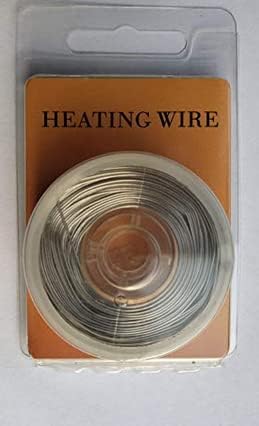
The Nichrome 80 Wire is a 110-foot roll of 28-gauge resistance wire measuring 0.30 mm in diameter. It holds a 4.6 customer rating and presents a practical combination of usable length, soft handling, and familiar resistance-wire construction. The product information specifically identifies it for hot-wire foam cutter machines.
We may earn a commission when you buy through this link, at no additional cost to you.
Its main advantage is the generous length relative to the compact form of a preinstalled cutter wire. That makes it easier to create multiple straight sections, replace several damaged sections over time, or experiment with the span and tension that suit a particular machine. The round, smooth wire has been heat-treatment annealed, which should make it easier to bend and position than a rigid wire.
The 0.30 mm diameter and stated 1,200°C maximum operating temperature are important, but they are not proof that the wire will work with every cutter. Electrical resistance, terminal design, and mounting requirements can vary between machines. This option is therefore most attractive for a user who understands the cutter’s wire specification or has measured and compared the original wire.
It is a sensible value-oriented choice for hobbyists who need length and flexibility rather than an exact-fit factory replacement. Confirm the cutter model and connection method before purchase, avoid forcing a different diameter into the handle, and treat the wire as a hot electrical element. For those needing a guaranteed model-specific fit, the WINONS or Proxxon options may be less ambiguous.
A 110-foot roll provides more material than is normally needed for a single cut. It can supply several replacement sections, accommodate a larger cutting frame, or reduce the frequency of ordering another spool.
The stated annealed finish supports easier bending during installation. That flexibility can help users create a straighter, more evenly tensioned line once the correct cutter specification is confirmed.
We may earn a commission when you buy through this link, at no additional cost to you.
This 50-meter, or 164-foot, spool of 0.3 mm electric hot wire has a 4.6 customer rating. Made from nickel-chromium alloy, it is positioned as a general heating wire for hot-wire foam cutting machines and other applications involving heating elements or resistance materials.
We may earn a commission when you buy through this link, at no additional cost to you.
The product listing emphasizes high-temperature resistance, a thin and flexible profile, and suitability for precise straight or curved lines. Those characteristics make it appealing for a replacement that must be formed to fit a cutter frame. The long spool is also useful for users who expect frequent replacement, multiple frames, or several cutters sharing a common wire specification.
Compatibility is broad in concept but not automatically guaranteed. Resistance wire must be matched carefully to the cutter’s power and design, and the product itself advises users to confirm suitability. The installation section says it can be fitted directly, but the actual attachment process can differ substantially between handheld tools, bow cutters, and machines with powered winding systems.
This is a strong general-purpose pick for informed hobbyists and small workshops that already know the required diameter and electrical characteristics. It provides a 4.6 rating and enough wire for repeated jobs, but an exact-fit factory wire is more convenient when the cutter model is known and the goal is simply restoration without guesswork.
The thin alloy wire can be shaped into straight runs or curves, giving makers flexibility when reproducing templates, outlines, and dimensional shapes in compatible foam.
The wire heats the foam through controlled contact or close placement, producing a melted edge. This approach can reduce loose fragments compared with a cold blade, although results still depend on temperature and technique.
We may earn a commission when you buy through this link, at no additional cost to you.
The WINONS WFC-0010 kit is a five-piece set of 180 mm German Typ 2000 copper-coated replacement wires with a 0.25 mm diameter. It is specifically designed for the WFC-0010 handle and is not advertised for other WINONS models, making its compatibility unusually clear for buyers who own the correct tool.
We may earn a commission when you buy through this link, at no additional cost to you.
Exact-fit accessories reduce the uncertainty that comes with generic resistance wire. The listing identifies the wire as matching the specification supplied with the original WFC-0010 kit, which gives buyers a clear basis for comparison. The five-wire pack also provides a practical reserve: a single installation error or damaged section does not leave the user without a replacement.
The stated compatible materials include EPS, XPS, EPE, EVA, EPP, and sponge. The tool’s appropriate temperature setting should be used for each material, because wire compatibility alone does not determine cut quality. The replacement process requires turning off the tool, allowing the wire to cool completely, and securing the new wire firmly before use.
This is the most straightforward recommendation for someone who owns a WFC-0010 and wants a factory-defined replacement. Its main limitations are the narrow model fit and the absence of a published rating, but neither undermines the value of a clearly specified, genuine replacement set.
The stated German Typ 2000, 0.25 mm specification gives owners a direct basis for restoring their cutter. It avoids the uncertainty of selecting an electrical heating wire merely by appearance.
Multiple short wires are useful for creating individual cutting sections or keeping a spare on hand. The compact format is particularly practical for the WFC-0010 handle.
We may earn a commission when you buy through this link, at no additional cost to you.
The TEAMWILL product is a 50-meter roll of approximately 0.3 mm Cr20Ni80 resistance wire. Its 4.5 rating and detailed specifications—80% nickel, 20% chromium, a stated 1,200°C maximum service temperature, and a 1,400°C melting point—make it a credible option for powered hot-wire equipment.
We may earn a commission when you buy through this link, at no additional cost to you.
Its resistance-wire properties are especially relevant to users who may also work with heating elements or industrial electrical projects. The listing cites high resistivity, strength, oxidation resistance, processing properties, and weldability. For foam cutting, the long length and precise diameter are the most immediately useful specifications because they determine whether the wire can be cut and installed in the target machine.
It is a one-roll package containing the wire, not a complete cutter or a model-specific accessory. As a result, users must understand the cutter’s electrical requirements and mounting method. A 0.3 mm wire may be physically similar to an original spool while differing in resistance, and that difference can affect heat output at a given power setting.
TEAMWILL is best for a user who values documented alloy and temperature characteristics and can verify machine compatibility. It is less convenient for someone who wants a drop-in replacement without checking specifications. If the cutter accepts a 0.3 mm resistance wire and the electrical load is appropriate, the generous length offers good value for repeated cutting work.
The stated maximum service temperature and melting point provide a technical basis for comparison. They help distinguish this wire from products that list only a cutter application.
Fifty meters of continuous wire can support larger frames and multiple replacement sections. Users should check whether their cutter can accept, tension, and electrically drive a wire of this diameter.
We may earn a commission when you buy through this link, at no additional cost to you.
This 50-meter electric hot wire is a general replacement option made from nickel-chromium alloy. It emphasizes mechanical strength, tensile properties, resistance to fracture and deformation, and structural stability during repeated high-temperature operation. The listing also states that the cutter model should be verified before purchase.
We may earn a commission when you buy through this link, at no additional cost to you.
Its construction addresses several practical concerns in foam cutting. A wire with useful tensile strength is easier to tension evenly, while resistance to deformation can help preserve the cutter’s geometry over time. The product information also says the hot-melt process helps form smoother edges and reduce fragmentation, loose particles, and dust.
The missing diameter and electrical details are more significant than they might first appear. A wire that looks appropriate can still behave differently if its resistance, current draw, or terminal fit does not match the cutter. “Wide compatibility” in the listing means the wire can be used with many cutters, not that it is automatically interchangeable with every model.
This option is worth considering for a craft-oriented user who values a long spool and durable alloy construction. It is less suitable for buyers seeking a guaranteed drop-in fit or detailed technical specifications. Confirming the original wire’s diameter and the cutter’s power requirements can make the difference between a smooth installation and a frustrating trial-and-error replacement.
The stated resistance to softening and deformation supports consistent geometry during repeated heating. That can be valuable for users who cut many pieces with the same cutter.
Heating the wire melts the compatible foam along the cutting line. This method can create a clean edge while reducing the debris associated with some mechanical cutting approaches.
We may earn a commission when you buy through this link, at no additional cost to you.
The Nichrome 80 Wire offers 110 feet of round, smooth 28-gauge resistance wire with a 0.30 mm diameter. It carries a 4.6 rating, is described as nonmagnetic, and has been heat-treatment annealed to a soft state. The stated maximum operating temperature for an element is 1,200°C.
We may earn a commission when you buy through this link, at no additional cost to you.
The soft annealing is a useful practical feature because replacement wire often must be bent or formed to follow the cutter’s frame. A smooth, bright surface may also reduce snagging during handling. Its 110-foot length gives adequate material for multiple sections and can accommodate a user who wants to cut the wire down to several different lengths.
This remains a general resistance wire rather than an explicitly named model-specific replacement. The diameter, electrical resistance, and the cutter’s power supply all influence whether the wire heats as intended. A physical fit alone does not guarantee safe or consistent operation, so comparing the original wire is the safest way to confirm a match.
For a buyer seeking a capable and economical long spool, this is one of the strongest choices in the list. Its soft construction, clear dimensions, and strong customer feedback make it easier to evaluate than products with sparse specifications. Exact-fit owners should still choose a wire explicitly designated for their cutter.
The soft wire is easier to bend than a harder resistance wire. That helps when forming a replacement section and securing it evenly at the cutter’s attachment points.
The full 110-foot length can be divided into several replacements. It is also useful for a large frame if the cutter’s electrical and mechanical specifications support the 0.30 mm wire.
We may earn a commission when you buy through this link, at no additional cost to you.
The 4-in-1 Hot Wire Foam Cutter Kit is a complete cutting system rather than a single replacement spool. It has a 4.3 rating and includes U-shaped and F-shaped blades, straight blades, replacement wires, a cleaning brush, a metal holder, and a storage case for convenient organization.
We may earn a commission when you buy through this link, at no additional cost to you.
Its major advantage is versatility. Interchangeable cutting heads allow users to make straight cuts, curves, grooves, and detailed designs with one tool. The heated U and F blades are listed as reaching up to 842°F, or 450°C, while the broader package includes components for hot-wire work.
As a replacement-wire search result, this kit is most relevant to someone who needs more than a new wire. It may serve a first-time cutter buyer or a user who wants several cutting methods in one package. It is less suitable for a simple repair of an existing machine, particularly if that machine has already damaged only one small wire section.
The kit’s included storage case and cleaning brush add convenience for organized workshop use. The listed compatible materials include EPS, EVA, XPS, PE foam board, KT board, and pearl cotton, making it suitable for model making, seasonal decorations, school projects, and general crafts. Treat it as a complete-tool alternative rather than a direct model-specific wire replacement.
Straight blades, curved hot-wire elements, U blades, and F blades expand the range of shapes and grooves the tool can produce. This makes the kit useful for varied project requirements.
The metal holder provides a place for the heated tool, while the case keeps the collection of blades, wires, and brush together. These features help maintain a tidy work area.
We may earn a commission when you buy through this link, at no additional cost to you.
The Proxxon 28080 is a spare cutting wire made specifically for the Proxxon 37080 Hot Wire Thermocut. It has a 4.6 rating, measures 96 feet long, and is intended for cutting Styrofoam and thermoplastic materials. Its exact machine reference is the most important feature in this review.
We may earn a commission when you buy through this link, at no additional cost to you.
A purpose-built spare gives owners confidence that the wire is intended for the tool’s design. That confidence comes from compatibility rather than simply a common 0.3 mm diameter. The 96-foot length is also substantial, allowing the owner to create replacement sections and retain a reserve without ordering another spool immediately.
The listing is concise and does not provide the alloy, exact electrical resistance, or detailed connection dimensions. It is therefore most useful to a buyer who already knows the cutter is a Proxxon 37080 Thermocut and wants the corresponding 28080 spare. Using the wire in a different cutter would not carry the same assurance.
For a qualified Proxxon owner, this is a straightforward and premium-caliber maintenance purchase. It restores the intended cutting function without requiring the buyer to interpret generic resistance-wire specifications. The 4.6 rating reinforces its position as one of the best-rated choices in the guide, though compatibility remains the decisive factor.
Because the replacement is tied to a specific cutter model, buyers do not need to rely on diameter alone. The model-specific designation provides a clearer basis for purchasing.
At 96 feet, the wire offers enough material for many replacement sections. Owners of compatible cutters can keep material on hand for routine maintenance.
We may earn a commission when you buy through this link, at no additional cost to you.
This replacement option is described as a 100-foot Nicad hot wire intended for a foam cutter. It is a sizable maintenance spool, but the product information is limited: no cutter model, diameter, resistance rating, or numerical customer rating is provided in the supplied listing data.
We may earn a commission when you buy through this link, at no additional cost to you.
The stated length is the clearest practical benefit. A 100-foot spool can supply multiple replacement sections or accommodate a cutter with a relatively long cutting span. Because it is identified specifically as hot wire rather than as miscellaneous electrical wire, it may suit users who already know that their equipment uses a similar Nicad element.
The missing specifications make model verification essential. Users should compare the existing cutter wire, inspect the attachment design, and check the tool’s electrical requirements before installing this product. A physically similar wire may have different resistance, which can cause inadequate heating, excessive heating, or damage if the cutter is not designed for it.
This is a reasonable choice for an experienced user searching for a long Nicad replacement and willing to verify compatibility. It is less attractive than the better-documented Nichrome 80, TEAMWILL, or model-specific options when the buyer has little technical information about the cutter. Clear original-wire specifications are the essential buying requirement.
One hundred feet allows repeated replacement without frequent reorders. It can also suit a longer cutting frame when the cutter is designed for compatible wire.
The absence of model and diameter information makes prior verification important. Compare the old wire and consult the cutter documentation whenever possible.
We may earn a commission when you buy through this link, at no additional cost to you.
This product is listed simply as a replacement wire for a foam cutter tool. The supplied product information does not identify a cutter brand or model, wire length, diameter, material, resistance, or customer rating. Its value therefore depends heavily on compatibility information visible elsewhere in the listing or on the buyer’s existing tool documentation.
We may earn a commission when you buy through this link, at no additional cost to you.
Replacement wires are useful because a heated cutting element can stretch, oxidize, distort, or break after repeated use. Restoring the original component is often simpler than converting the cutter to a different blade or heating system. This option is positioned for that straightforward replacement purpose rather than as a general bulk spool or complete cutting kit.
The lack of details makes independent confirmation difficult. Buyers should compare the wire’s thickness, connector or mounting style, and electrical behavior with the removed component. They should also review the cutter’s instructions to determine whether the replacement requires a specific length, tension method, or resistance rating.
It is best positioned last because the available information is sparse, not because a replacement wire is inherently unsuitable. If the listing’s model information matches the user’s cutter, a purpose-made spare can be the most convenient option. Otherwise, a product with published diameter, length, alloy, and compatibility details offers a more dependable basis for selection.
A correct replacement returns the cutter to its intended hot-wire method. This can be more dependable than improvising with a visually similar but electrically different wire.
Measurements and terminal details from the old wire can reveal whether it is the correct replacement. Turn the tool off and let it cool before inspecting or handling the component.
We may earn a commission when you buy through this link, at no additional cost to you.
The right replacement wire depends on more than diameter. Use the cutter model, original wire measurements, electrical design, installation method, and intended foam to narrow the field before comparing length, alloy, and convenience features.
Begin with the cutter’s brand and model because mounting hardware, power requirements, and resistance values can differ even among tools that use similar-looking wires. A model-specific listing such as the WINONS WFC-0010 kit or Proxxon 28080 wire is generally easier to trust than a generic description. If the model is unknown, photograph the cutter and locate its manual before ordering. A visually similar connector does not prove electrical compatibility.
Diameter affects mechanical fit, resistance, heat output, and how the wire behaves under tension. Several products in this guide use 0.3 mm wire, while the WINONS WFC-0010 kit uses 0.25 mm. Measure the original wire without stretching it, or use a micrometer if available. A close visual match can still be misleading, so a measured comparison is more dependable.
Resistance determines how the wire responds to the cutter’s power and contributes to heat generation. A cutter designed for a different resistance may underheat, overheat, or place unnecessary stress on its controls. Generic spools should be checked against the original wire and the cutter documentation. Buyers who cannot verify these details should choose a product explicitly sold as a replacement for their exact model.
Length needs reflect both the cutter’s cutting span and the number of replacements desired. The Proxxon and Nicrome 80 products provide 96 and 110 feet respectively, while the WINONS kit includes five 180 mm wires. Bulk spools suit flexible or large-frame projects, whereas pre-cut short sections are convenient for compact handles and exact-fit tools. Consider how you will store and divide the material before choosing.
Nichrome and related nickel-chromium alloys are commonly used because they resist oxidation and maintain structural properties at elevated temperatures. The TEAMWILL option provides detailed Cr20Ni80 and temperature information, while several others identify nickel-chromium construction more generally. Alloy details are useful for comparing longevity, but they do not replace checking voltage, resistance, and cutter fit.
Different foams respond differently to heat and may require different temperature settings. The WINONS listing names EPS, XPS, EPE, EVA, EPP, and sponge, while the Proxxon wire is identified for Styrofoam and thermoplastics. A wire may physically function with a cutter yet still produce a poor result in a dense or temperature-sensitive material. Always use the cutter’s approved settings and test on scrap material.
Some wires mount in a handheld frame, while others must be wound onto a powered cutter. The WINONS set is made for a specific handle, whereas the generic 0.3 mm spools require the buyer to understand the cutter’s terminals and tensioning process. Secure connections carefully and avoid twisting fine strands in a way that creates a concentrated hot spot. The product may be simple to install, but compatibility remains the first requirement.
A working replacement wire becomes extremely hot during use and should be treated as a burn and electrical hazard. Turn off and unplug the cutter, allow the wire to cool, and use suitable eye and hand protection. Keep replacement spools dry and stored where they cannot be damaged. Keep the cutter’s ventilation unobstructed and never work around a damaged, sagging, or improperly tensioned heating element.
Before replacing the wire, unplug the cutter and allow the old element to cool completely. Remove the spent wire only after confirming the tool is off, then compare its diameter, length, mounting method, and connection style with the new wire. If using a generic spool, verify the cutter’s resistance and power requirements before installation. For a model-specific product, confirm the cutter and handle model numbers on the tool and listing.
Install the new wire evenly, following the cutter’s manual and the wire manufacturer’s instructions. Secure each terminal without leaving loose strands, pinch points, or sharp bends. Proper tension keeps the cutting line straight and reduces stress, but excessive tension can deform the wire or damage the frame. For powered winding systems, use the machine’s intended mechanism rather than improvising a connection.
Set the cutter to a temperature appropriate for the foam and test on an offcut before making the final cut. Allow the wire to reach temperature, then begin with a slower pass to evaluate the edge and adjust the temperature or travel speed as needed. Turn off and unplug the cutter after use, let the wire cool in place, and inspect it for stretching, oxidation, thinning, or damaged connections before storing the tool.
No. Diameter is only one part of compatibility because the cutter’s power, resistance, current draw, and connection design also matter. A wire that fits physically may heat differently from the original. Use the cutter manual or compare the existing wire’s specifications, and choose a model-specific replacement whenever possible.
For a Proxxon 37080 Hot Wire Thermocut, the Proxxon 28080 replacement is the clearest match in this guide. It is specifically listed for that machine, measures 96 feet, and is intended for Styrofoam and thermoplastic materials. Confirm the model number on the cutter before ordering.
Neither is universally better because the cutter’s original design determines the appropriate wire. Copper-coated wire in the WINONS kit is specified for a particular handle, while nichrome options are general resistance-wire choices. Match the construction, dimensions, and electrical behavior required by the cutter rather than selecting solely on the material name.
Check the cutter’s manual or listing, and compare it with the old wire if it is still installed. Measure the diameter with a micrometer or another precise tool without stretching the wire. Do not rely only on visual thickness, since resistance-wire differences may be difficult to judge by sight.
A compatible hot-wire cutter can cut those materials when its temperature and cutting method are appropriate. The WINONS WFC-0010 kit specifically lists EPS, XPS, EPE, EVA, EPP, and sponge as compatible. In every case, follow the cutter’s material settings and test on scrap foam before completing a project.
The cause may be an incorrect diameter, different resistance, loose connection, damaged terminal, or a cutter that requires a specific replacement method. Turn the tool off and let it cool before inspecting the installation. If the wire matches the original specifications, check the cutter’s controls, connections, and manufacturer guidance for troubleshooting.
Replacement depends on frequency, temperature, material, and visible condition rather than a fixed calendar. Replace it if it becomes thin, brittle, severely oxidized, unevenly stretched, or repeatedly breaks. Cleaning and correct tension can extend service life, but a damaged heating element should not remain in service because concentrated hot spots can create poor cuts or safety risks.
A long spool is useful when making multiple sections, working on a large frame, or keeping spare material available. However, length does not guarantee compatibility. The wire’s diameter, resistance, mounting style, and electrical requirements must match the cutter before its overall length becomes an advantage.
The strongest choices depend on how precisely the cutter is identified. The WINONS five-wire kit is the most straightforward pick for a WFC-0010 owner, while the Proxxon 28080 is the best fit for the 37080 Thermocut. For a more general application, the Nichrome 80 spool offers a long, soft 0.30 mm wire, and the 50-meter nickel-chromium options provide more material for users who can confirm electrical compatibility.
Prioritize exact model compatibility before length, packaging, or material claims. Measure the original wire, inspect the connection method, and check the cutter’s power requirements. If a generic resistance spool cannot be verified, choosing a factory-designated replacement is safer and usually less troublesome than adapting a wire whose electrical behavior is unknown.
Finally, compare current listings before purchasing because product details, ratings, and prices can change. Review the dimensions, intended foam types, and installation instructions, and choose a product that gives you a clear technical basis for restoring the cutter.